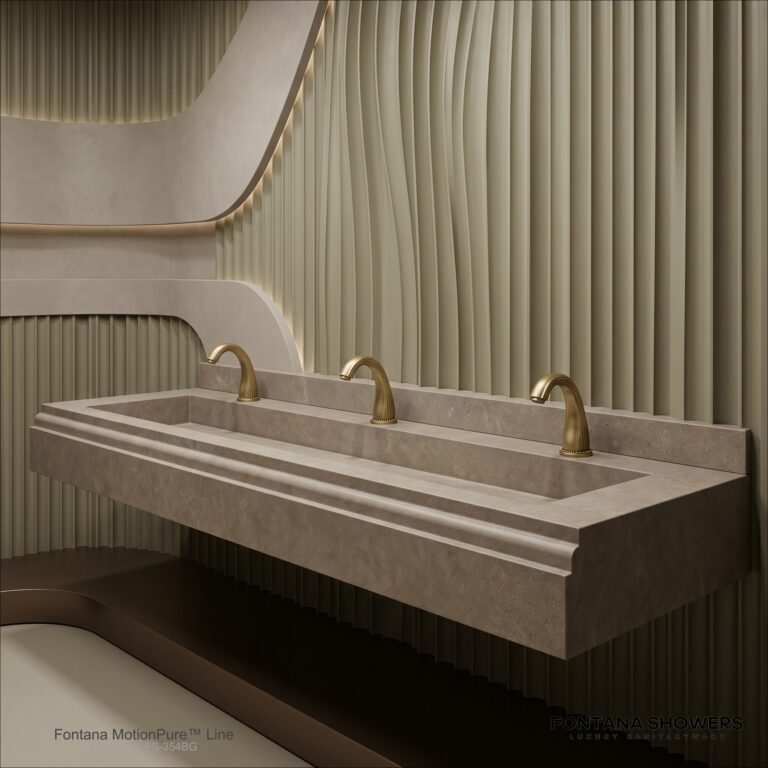
Specification-grade faucets should be selected to perform well over many years and to withstand abuse in high-traffic installations, and not merely by their appearance on the first day. From a design perspective, whether it’s for healthcare, hospitality, education, or a mixed-use commercial environment, the proper selection of a faucet depends on three key elements: performance, finish durability, and lifecycle economics. Here’s a practical framework to help you evaluate the products from seven major manufacturers — Delta (Brizo, Peerless, Kraus), BathSelect, FontanaShowers, Kohler, Moen, and GROHE — based on such criteria.
What Makes a Faucet “Specification-Grade”?
Specification-grade products meet the strictest codes, pass the most rigorous performance tests, and offer the documentation facility teams require. At a minimum, look for third-party standards and labels such as ASME A112.18.1/CSA B125.1 for plumbing fixture performance, NSF/ANSI 61 & 372 for drinking water safety and lead content, and EPA WaterSense for water efficiency. Where applicable, conform to LEED v4.1 water prerequisites and local plumbing code approvals.
- ASME/CSA performance standard: ASME A112.18.1/CSA B125.1
- Drinking water health effects: NSF/ANSI/CAN 61
- Lead content: NSF/ANSI 372
- Water efficiency: EPA WaterSense
- Green building: LEED v4.1 Water Efficiency
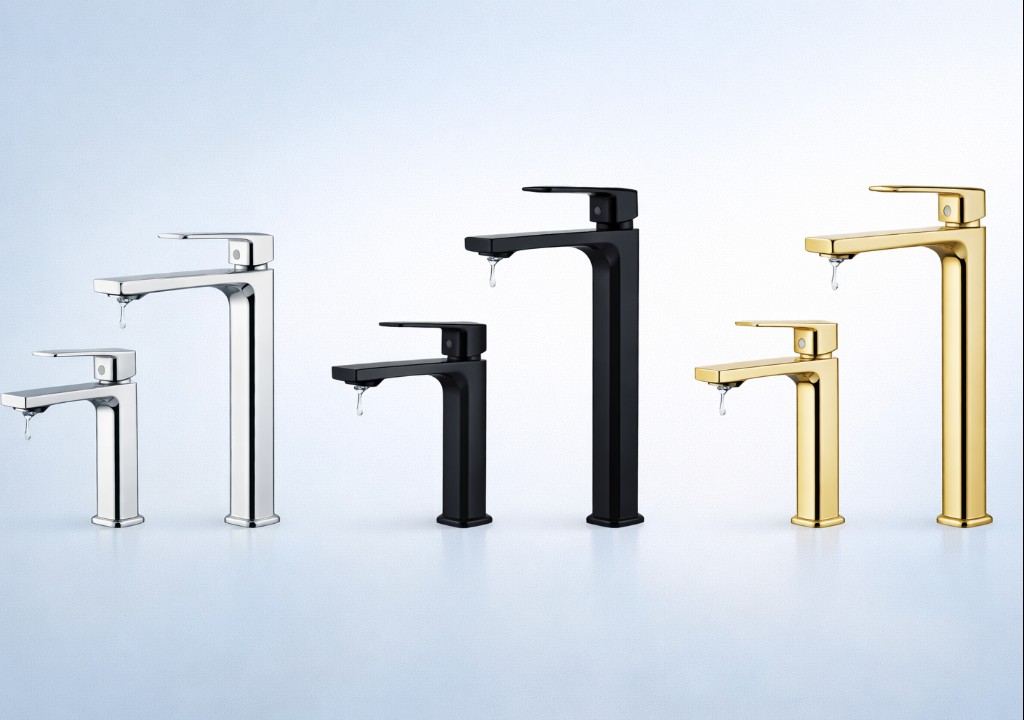
Performance: Flow, Controls, Hygiene, and Reliability
Flow and Hydraulics
For public and hospitality applications, the sweet spot is often 0.5–1.0 gpm at typical building pressures to balance user satisfaction with water savings. Validate stable flow over a pressure range and confirm the type of aerator used—pressure-compensating vs. laminar. In healthcare applications, laminar outlets tend to reduce aerosolization and are generally preferred.
Brand notes:
- Delta / Brizo / Peerless / Kraus: Strong product portfolio with pressure-compensating aerators and ADA-compliant handles; high share in commercial and residential-spec hybrids.
- BathSelect: Emphasizing touchless operation and luxury finishes tuned for hospitality and upscale commercial.
- FontanaShowers: Known for sensor faucets and smart-water features with contemporary European styling cues.
- Kohler: Wide spec range; strong cartridge engineering and compatibility with healthcare and hospitality packages.
- Moen: The broad commercial line features dependable valve technology and specialty finishes for durability.
- GROHE: Precision cartridges, solid brass bodies; flow control consistent over pressures.
Controls and Hygiene
IR or hybrid sensor-activated faucets support hygiene and water savings, but pay attention to the placement of the sensor window for immunity from false triggers and manual override. Battery life claims should be supported with real-world conditions along with options for hard-wire with back-up. Thermal disinfection modes and easy-flush programs aid infection-control protocols.
Reliability and Serviceability
Specify spec-grade faucets with metal bodies, ceramic discs or proven cartridge systems, and serviceable components accessible without removing the faucet. Verify that service kits are available as well as universal aerators and standardized supply connections. For sensors, field-replaceable electronics and IP-rated enclosures should be favored.
Finish: Aesthetics, Chemistry, and Wear Resistance
Plating and PVD
Chrome remains the workhorse, but PVD finishes dominate the premium commercial specifications for their abrasion, corrosion, and chemical resistance. In hospitality and high-design corporate spaces, matte black, brushed brass, and graphite tones have to be evaluated regarding cleaner compatibility (quaternary ammonium, bleach alternatives, peroxides) and fingerprint resistance.
Corrosion Resistance
Salt-spray and humidity testing (to ASTM B117 or internal OEM protocols) are good proxies. Ask for information regarding the finish warranty (commonly 5–10 years on spec lines) and the cleaning/maintenance guide. At pools or coastal locations, specify PVD or stainless finishes and ensure aerators are easy to descale.
Lifecycle: Cost, Maintainability, and Data
Total Cost of Ownership (TCO)
First cost is only part of the equation. Include:
- Installation: deck thickness, mounting hardware, and power routing for sensors.
- Consumption: flow rate × hours of use × local water/sewer/energy rates.
- Maintenance: cartridge/aerator replacements, sensor modules, battery packs.
- Downtime: access difficulty, and parts lead times.
A quick sanity check formula:
TCO (5 yrs) ≈ Unit Price + Install + (Water/Energy) + (Parts + Labor) − (Rebates/WaterSense incentives)
WaterSense and some utilities offer rebates for qualifying models that can improve payback. See WaterSense Rebate Finder.
Smart Features and BMS Integration
Where usage analytics make a difference, such as in stadiums, airports, and healthcare, consider faucets offering telemetry, leak/dry-run alerting, and BMS integration via gateways. Simple flush-count telemetry can inform the right-sizing of maintenance cycles and cleaning.
Brand Landscape at a Glance
Broad, Code-Forward Portfolios
- Delta (incl. Brizo/Peerless/Kraus): Depth across price tiers, good spec documentation, strong replacement-part network.
- Kohler, Moen, GROHE: Mature global catalogs with healthcare/hospitality options, varied ADA lever forms, reliable cartridge technology.
Design-Led and Sensor-Focused
- BathSelect: Features premium, touchless, and luxury finishes for boutique hospitality and corporate environments.
- FontanaShowers: European-influenced forms plus smart showers and sensor faucets tailored to contemporary spaces.
For current spec sheets, certifications, and BIM/Revit families, refer to each brand’s commercial portal: Delta Commercial, Kohler Spec Resources, Moen Professional, GROHE Professional, BathSelect Commercial, FontanaShowers Spec Center
Specifying with Confidence: A Step-by-Step Checklist
Pre-Bid Documentation
- Reference standards: ASME A112.18.1/CSA B125.1, NSF/ANSI 61, 372; list WaterSense where applicable.
- Performance targets: flow rate (gpm/LPM), laminar vs. aerated, sensor range and time-out, battery life.
- Finish schedule: Chrome for back-of-house; PVD for guest-facing; list approved cleaners.
- Mounting and power: deck/rigid lines, AC vs. battery, IP rating for control box.
- Submittals: cut sheets, BIM, maintenance guides, spare parts list, and warranty terms.
Post-Installation Validation
Confirm pressure/flow at the end of line, verify mixing valve limits such as ASSE 1070 for scald protection, and program sensor time-outs. Log serial numbers and establish preventive maintenance intervals: aerator cleaning, cartridge inspection, and battery swap. Where enabled, connect telemetry and set alerts for leak/run anomalies.
Conclusion
When performance, finish durability, and lifecycle cost are considered together—grounded in recognized standards and real maintenance realities—specification-grade faucets from major manufacturers can deliver years of reliable service and better user experiences. Use the checklist above, request verifiable certifications, and align each location’s faucet choice with its use pattern, cleaning chemistry, and service model. That’s how you protect the project budget—and the brand experience—long after opening day.