
About ArchFaucets: Technical Resources for Faucet Specification
ArchFaucets.com publishes research-based technical resources for architects, designers, engineers, plumbing professionals, specifiers, contractors, facility planners and informed building owners evaluating faucets and related plumbing fixtures. Our scope includes commercial, hospitality, institutional and high-end residential projects, with emphasis on documented performance, fixture coordination, materials, finishes, touchless technology, water efficiency, accessibility, installation and long-term maintenance.
Our purpose: faucets are evaluated as part of a larger architectural and plumbing system, not only as decorative objects. Selection can involve basin geometry, hydraulics, accessibility, sensing, power, finish performance, cleaning, maintenance, sustainability and project documentation.
Technical Reference Resources for Architectural Faucet Specification
ArchFaucets.com is structured as an educational reference library for teams working through design, specification, installation and facility-operation decisions. Content organizes terminology, product data, performance criteria, standards context and maintenance considerations into practical technical references.
Architectural faucets are normally evaluated within broader building-system requirements including usability, flow, pressure, accessibility, durability, service access, resource efficiency and compatibility with surrounding construction. Our goal is to help project teams identify those variables before a product reaches procurement or installation.
Design + Fixture Integration
Faucet geometry is reviewed in relation to basins, countertops, mounting surfaces, surrounding finishes, clearances and the visual language of the broader fixture family.
Hydraulics + Plumbing Coordination
Technical review includes flow, pressure, supply connections, mixing, valves, aeration, filtration, shutoff behavior and compatibility with project plumbing conditions.
Touchless + Smart Faucet Systems
Sensor-operated fixtures are considered as assemblies that may include sensing, power, controllers, solenoid valves, temperature management, diagnostics and service access.
Maintenance + Lifecycle Planning
Serviceability, cleaning compatibility, replacement parts, cartridges, sensors, batteries, solenoids and access conditions are part of the specification discussion.
Faucet Technology and Plumbing Design in Context
Our research connects visible fixture design with the technical systems that determine how faucets perform, how they are installed and how they are maintained after turnover.
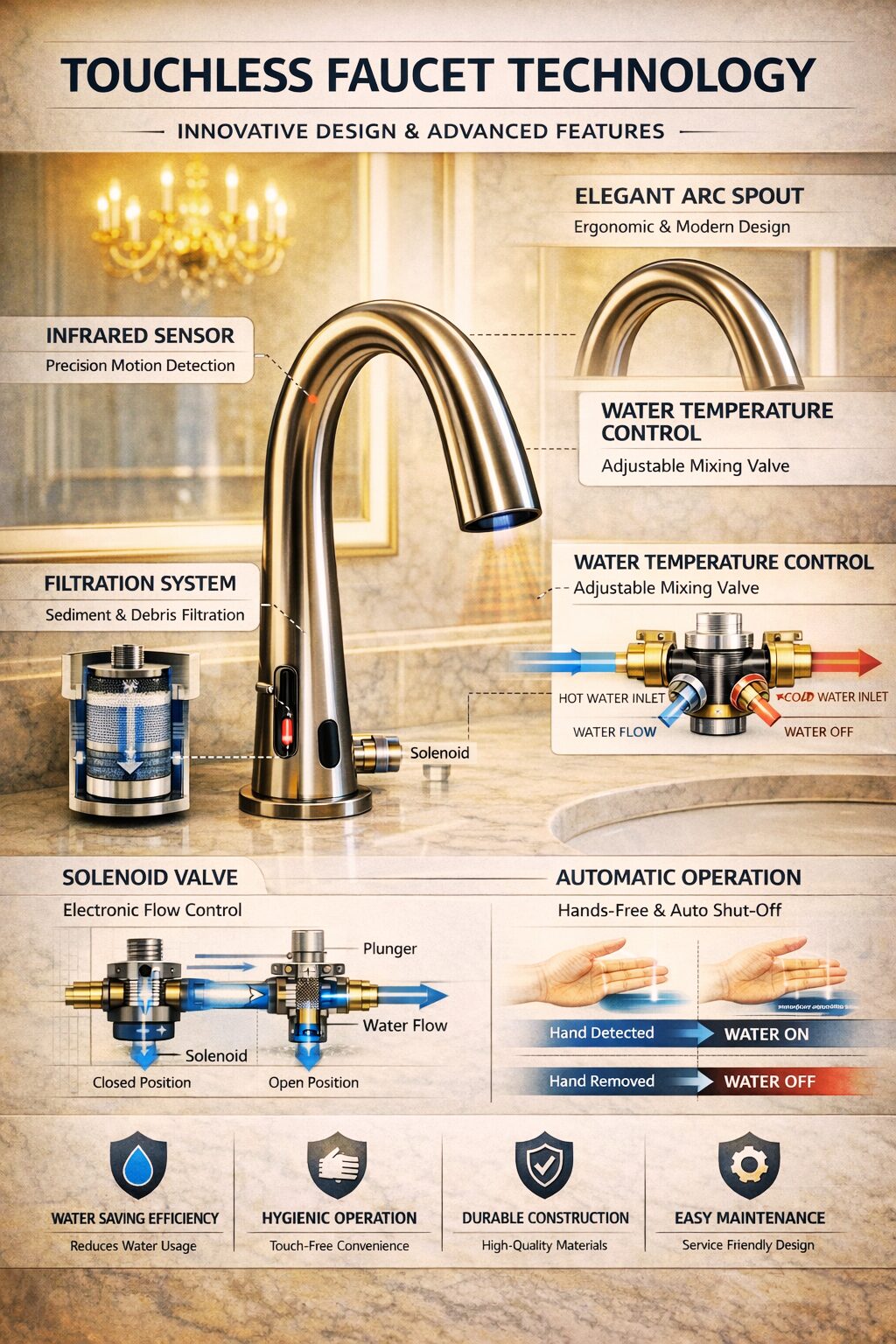
Touchless Faucet Technology
Sensor activation, detection conditions, power architecture, valve behavior and maintenance access influence the performance of a commercial touchless faucet installation.
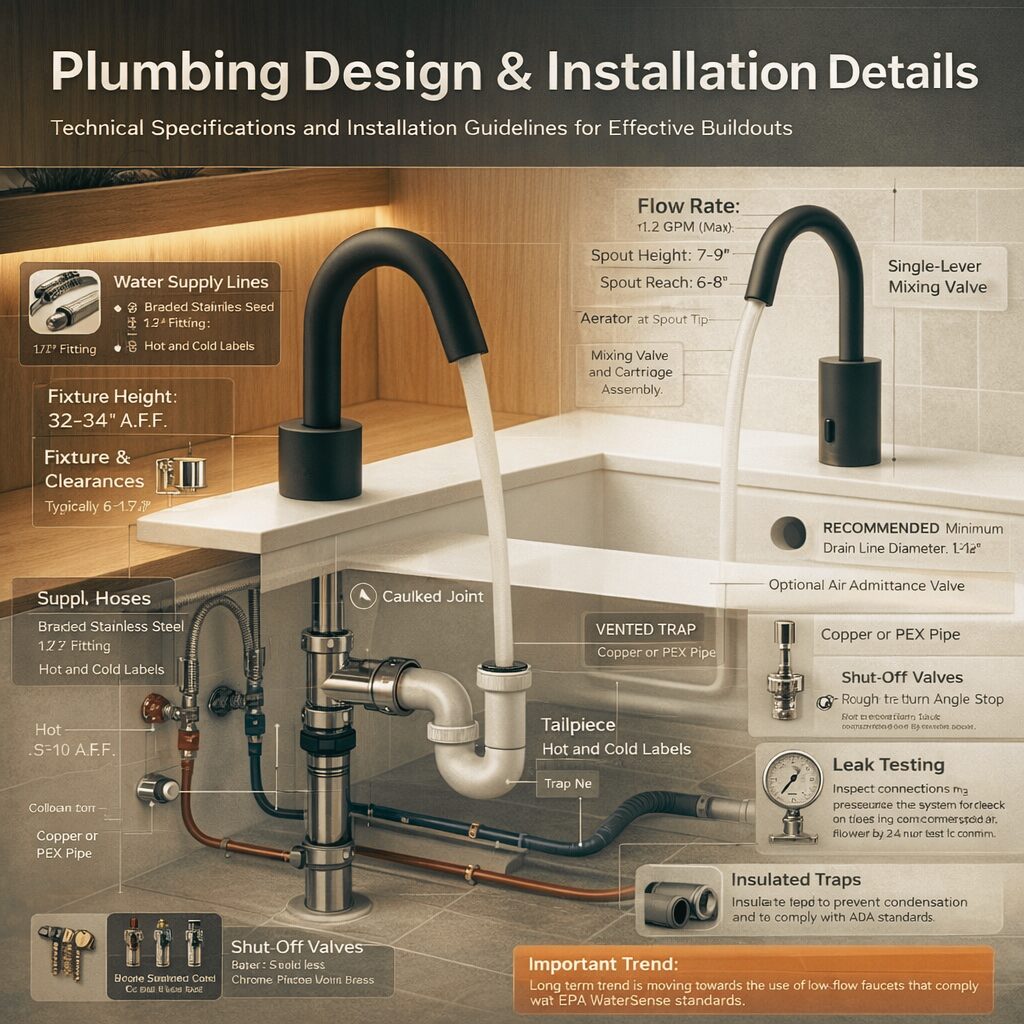
Plumbing + Fixture Coordination
Faucet selection should be coordinated with rough-in, basin geometry, mounting, supplies, accessibility, service clearances and the overall plumbing design.
Design, Performance, Sustainability and Maintenance Topics
ArchFaucets content applies across residential, commercial, hospitality and institutional project types, from early design through procurement, construction closeout and maintenance planning.
- Faucet Materials: research covers common fixture construction including solid brass, stainless steel and engineered materials, with attention to corrosion, durability and compatibility with expected use conditions.
- Finishes & Coatings: finish selection is reviewed for appearance retention, wear, cleaning chemistry, corrosion exposure and coordination across architectural fixture families.
- Touchless Technologies: technical references address sensing, activation zones, power strategy, valve architecture, commissioning, maintenance and common commercial applications.
- Water Efficiency: flow rates, aerators, user experience and water-use objectives are considered alongside documented performance and project requirements.
- ADA Accessibility: faucet operability, sensor activation, mounting and lavatory coordination are reviewed against applicable accessibility requirements and guidance.
- Coordinated Fixture Planning: faucets are reviewed with basins, countertops, plumbing systems, finish palettes and surrounding fixtures to support consistent project-wide specification.
- Case Studies & Best Practices: project examples can document selection, installation, operating conditions, maintenance realities and long-term performance observations.
How ArchFaucets Develops Technical Content
Educational articles, whitepapers and technical comparisons are organized around documented criteria and publicly available information rather than appearance or brand recognition alone.
- Published specifications: exact-model product data, installation information, materials, flow, power, dimensions and maintenance requirements are reviewed where available.
- Consistent comparison criteria: products may be compared across materials, finishes, functional behavior, sustainability factors, service conditions and lifecycle considerations.
- Material and finish performance: research considers corrosion resistance, wear, PVD systems, plated finishes, engineered polymers and maintenance compatibility.
- Touchless and smart systems: sensor activation, temperature control, flow monitoring, power strategy and potential building-system integration are treated as technical variables.
- Sustainability context: low-flow faucets, aeration and resource-use strategies are discussed alongside WaterSense, LEED and other applicable project frameworks.
- Accessibility context: ADA-related research considers operability, reach, sensor use and fixture installation conditions using authoritative accessibility references.
- Installation and lifecycle: rough-in, mounting, commissioning, service access, replacement parts and maintenance requirements are considered alongside initial selection.
Standards, Codes and Public Technical References
ArchFaucets uses recognized standards and public-sector guidance to establish technical context. Requirements must still be verified for the exact product, adopted code, jurisdiction and project.
Written for Architecture, Engineering, Construction and Facilities Teams
ArchFaucets resources support different project participants because each discipline encounters a different part of the fixture-selection process.
| Audience | Primary Concerns | Typical ArchFaucets Research |
|---|---|---|
| Architects | Design integration, accessibility, dimensions, finishes and specification. | Fixture geometry, materials, finish systems, coordination and documentation. |
| Interior Designers | Design intent, finish relationships and coordinated fixture families. | Finish performance, material compatibility and visual integration. |
| Engineers | Flow, pressure, valves, connections, efficiency and controls. | Hydraulic performance, plumbing standards, sensing and system interfaces. |
| Builders & Contractors | Rough-in, mounting, installation, power and commissioning. | Installation constraints, service zones and product documentation. |
| Facility Teams | Reliability, cleaning, parts, diagnostics and maintenance. | Serviceability, lifecycle planning, cartridges, sensors and replacement components. |
| Homeowners & Renovators | Fit, safety, design, maintenance and performance. | Research-based selection criteria for kitchen and bathroom renovation decisions. |
Architecture, Engineering and Fixture Industry Resources
ArchFaucets also references organizations, firms and product-resource platforms that contribute to architecture, engineering, plumbing, hospitality, building performance and commercial fixture research.
Professional architecture practice, design leadership and industry resources.
AIA →Plumbing engineering knowledge and technical system coordination.
ASPE →Architecture and design across workplace, hospitality, aviation and mixed-use environments.
Gensler →Architecture, planning and building-performance design.
HOK →Architecture and design research across healthcare, education, workplace and civic environments.
Perkins&Will →Engineering, sustainability and integrated building-performance expertise.
Arup →BIM content and digital product-information resources for design teams.
BIMobject →Commercial restroom and sensor-faucet product reference.
Sloan →Touchless fixture technology and commercial sensor-faucet applications.
Fontana Touchless →Bathroom fixture references for hospitality, residential and commercial applications.
BathSelect →Product and Manufacturer Reference Material
Manufacturer pages can be useful starting points for product-family research, material descriptions, finishes, installation concepts and system options. Exact project requirements should always be checked against current model-specific documentation.
How ArchFaucets.com Is Structured
ArchFaucets.com is a research hub for architects, engineers, designers, contractors and facility teams working on faucet and fixture specification. The library organizes technical concepts, performance considerations, compliance constraints, comparison criteria and maintenance realities into practical references that can support project documentation and long-term service planning.
Educational Articles + Technical Guides
Resources summarize factors relevant to selection, installation, commissioning, maintenance and performance verification.
Public-Specification Comparisons
Comparisons use documented criteria such as materials, finish performance, functional behavior, environmental impact and service requirements.
Material + Finish Research
Brass, stainless steel, coatings, PVD systems, corrosion, cleanability and visual consistency are considered in relation to actual use.
Touchless + Smart Fixture Research
Content addresses sensor systems, automatic control, temperature management, power, flow monitoring and related smart-fixture features.
Professional Contributions and Technical Input
ArchFaucets welcomes structured professional input including case notes, field observations, installation lessons, commissioning findings, maintenance experience and technical commentary. Contributions are most useful when they identify the actual product, application, operating conditions and evidence supporting the observation.
Case studies can help document how architectural faucets perform across luxury residential, hospitality, institutional and large-scale commercial environments while preserving a clear distinction between direct observation, manufacturer claims and editorial interpretation.
Editorial Scope and Specification Responsibility
ArchFaucets.com is an educational reference intended to support research, design development, specification, documentation and maintenance planning. Content should be used together with current manufacturer documents, applicable codes, adopted standards and project-specific professional review.
Technical Verification Note
Flow rates, materials, dimensions, sensing characteristics, power requirements, certifications and maintenance requirements can vary between product models and revisions. Final project decisions should therefore be based on the exact submitted model and current documentation rather than assumptions applied across an entire brand or collection.