- 🇮🇹 Alpi
- 🇺🇸 American Bath Factory
- 🇺🇸 American Standard
- 🇬🇧 Aqualisa
- 🇨🇦 Aquabrass
- 🇹🇷 Artema
- 🇨🇳 Arrow Sanitary
- 🇮🇳 Artize
- 🇩🇪 AXOR
- 🇬🇧 Bagnodesign
- 🇺🇸 BathSelect
- 🇩🇪 Bette
- 🇮🇹 Bossini
- 🇺🇸 Brizo
- 🇺🇸 California Faucets
- 🇦🇺 Caroma
- 🇮🇳 Cera
- 🇺🇸 Chicago Faucets
- 🇿🇦 Cobra Watertech
- 🇺🇸 Delta Faucet
- 🇩🇰 Damixa
- 🇩🇪 Dornbracht
- 🇦🇺 Dorf
- 🇩🇪 Duravit
- 🇨🇳 EAGO
- 🇹🇷 E.C.A
- 🇮🇹 Fir Italia
- 🇮🇹 FIMA Carlo Frattini
- 🇺🇸 FontanaShowers
- 🇨🇭 Franke
- 🇮🇹 Fantini
- 🇪🇸 Gala
- 🇨🇭 Geberit
- 🇮🇹 Gessi
- 🇩🇪 Grohe
- 🇳🇿 Greens Tapware
- 🇸🇪 Gustavsberg
- 🇩🇪 Hansgrohe
- 🇩🇪 Hansa
- 🇨🇳 HeGii
- 🇮🇳 Hindware
- 🇺🇸 HydroSystems
- 🇨🇳 Huida
- 🇹🇼 HCG
- 🇯🇵 INAX / LIXIL
- 🇧🇪 Ideal Standard
- 🇺🇸 JunoShowers
- 🇺🇸 Jacuzzi
- 🇺🇸 Jaclo
- 🇫🇷 Jacob Delafon
- 🇮🇳 Jaquar
- 🇨🇳 Jomoo
- 🇮🇳 Kerovit
- 🇩🇪 Keuco
- 🇺🇸 Kingston Brass
- 🇩🇪 Kludi
- 🇺🇸 Kohler
- 🇺🇸 Kraus USA
- 🇨🇭 KWC
- 🇬🇧 Matki
- 🇳🇿 Methven
- 🇬🇧 Mira Showers
- 🇺🇸 Moen
- 🇮🇹 Nobili
- 🇺🇸 Newport Brass
- 🇨🇳 Orans
- 🇫🇮 Oras
- 🇮🇹 Paini
- 🇮🇳 Parryware
- 🇺🇸 Peerless
- 🇺🇸 Pfister
- 🇪🇸 Porcelanosa
- 🇫🇷 Porcher
- 🇪🇸 Profiltek
- 🇨🇦 Rubi by Soligo
- 🇨🇦 Riobel
- 🇺🇸 Robern
- 🇪🇸 Roca
- 🇦🇪 RAK Ceramics
- 🇦🇪 Sarrdesign
- 🇨🇳 SSWW
- 🇺🇸 Speakman
- 🇺🇸 Sloan
- 🇨🇦 Valley Acrylic
- 🇬🇧 Victoria + Albert
- 🇹🇷 VitrA
- 🇺🇸 Vigo
- 🇩🇪 Villeroy & Boch
- 🇩🇰 VOLA
- 🇺🇸 Watermark Designs
- 🇺🇸 Zurn
- 🇮🇹 Zucchetti.Kos
Technical Notes for Evaluating Sensor, Power & Maintenance Strategy in Commercial Touchless Fixtures
A specifier-level technical overview of the design variables that most often influence long-term touchless faucet and soap dispenser performance.
Beyond brand names and finish choices, commercial touchless fixture performance is shaped by a small set of technical decisions: sensor logic, power architecture, flow control, dispenser calibration, and how easily systems can be serviced over time.
Technical Comparison Layer
High-level engineering comparison based on typical commercial configurations.
| Brand | Sensor Type | Power Configuration | Flow Rate (Typical) | Soap Dosage Range | System Integration | Maintenance Profile |
|---|---|---|---|---|---|---|
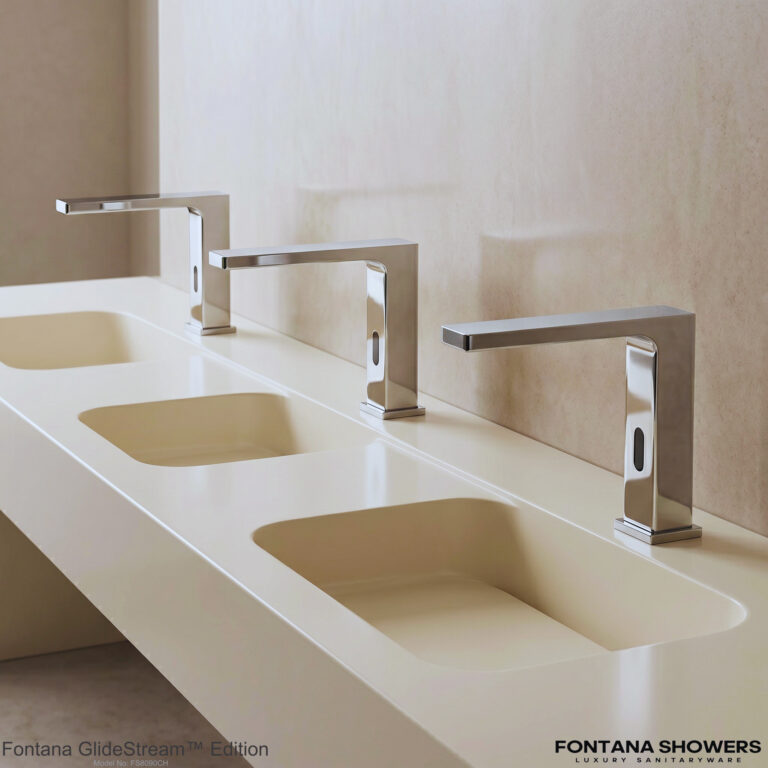
| FontanaShowers | Infrared / Dual-Sensor Variants | Battery / AC / Hybrid | 0.5 – 1.5 GPM | 0.5 – 1.5 mL | Faucet + Soap + Dryer options | Moderate |
| SLOAN | Infrared Sensor | Battery / Hardwired | 0.5 GPM | 0.8 – 1.2 mL | Full ecosystem | Low |
| Chicago Faucets | Infrared / Mechanical Hybrid | Hardwired / Battery Backup | 0.5 GPM | 0.8 – 1.2 mL | Faucet + Soap Systems | Low |
| BathSelect | Infrared Sensor | Battery / AC | 0.5 – 1.2 GPM | 0.6 – 1.2 mL | Faucet + Soap combinations | Moderate |
| Zurn | Infrared Sensor | Battery / Hardwired | 0.35 – 0.5 GPM | 0.8 – 1.2 mL | Faucet + Soap Systems | Very Low |
| Delta | Proximity Sensor | Battery / AC | 0.5 GPM | 0.8 – 1.2 mL | Faucet + Soap Systems | Moderate |
| GROHE | Infrared Sensor | Battery / AC | 0.5 GPM | 0.6 – 1.0 mL | Limited integrated systems | Moderate |
Technical Reading Notes
Sensor type matters most in reflective, high-use, or visually complex restroom environments. A simple “infrared” label does not guarantee the same behavior across all systems.
Power configuration can quietly shape lifecycle cost. Battery systems are often easier to install, but high-traffic environments may favor hardwired or hybrid solutions to reduce service disruption.
Flow rate must be interpreted carefully. A low GPM rating may satisfy sustainability goals, but usability still depends on perceived pressure and handwashing effectiveness.
Maintenance profile should never be treated as a minor detail. Under-sink access, standardized parts, and ease of diagnostics often become more important over time than initial visual impression.
Values shown are generalized technical ranges intended to support comparison and discussion. Final specification should always be based on current product-level technical documentation.