Installation Coordination Between Architecture & MEP: Faucets, Plumbing and Specification Workflows

Installation Coordination Between Architecture & MEP: Faucets, Plumbing and Specification Workflows

Introduction

In the construction and architectural design field, the coordination between the Architecture and the Mechanical, Electrical, and Plumbing (MEP) disciplines is very important for the effective implementation of the plumbing system. This helps in ensuring that the installation of every aspect of the plumbing system, including the faucets, is performed in accordance with the design intent and the code requirements. This is made possible with the cooperation of the architects and the MEP experts.

Faucet installation requires careful planning and coordination between teams. Every element, from pipe fittings to fixture placement, must align with architectural requirements. This article explores the key factors influencing faucet and plumbing system installations. It also outlines workflows, specifications, and best practices to ensure smooth coordination throughout the project.

The Role of Harmonization Between Architecture and MEP

Important Parties Involved in Faucet Installation

Coordination in faucet installation entails several actors with distinct roles as follows:

  • Architects: They are tasked with designing buildings, as well as planning where things such as faucets ought to be installed.
  • MEP Engineers: MEP Engineers are to ensure that plumbing facilities, including water taps, are planned and provided in an optimized manner, from energy efficiency and user convenience perspectives and also from official norms and standards.
  • Plumbing Contractors: Install and maintain plumbing systems. Their task is to strictly follow the plans and specifications.
  • General Contractors and Project Managers: They manage the entire project to ensure all stakeholders meet deadlines and remain within budget while complying with design specifications.

Communication among all the teams involved is imperative to ensure that the installation of faucets is carried out as scheduled without problems pertaining to installation, plumbing, and management of the water supply.

Common Problems to Expect during the Faucet Installation Coordination Process

In the absence of proper coordination, several problems can develop during the installation of faucets:

  • Misaligned Fixture Placement: Misplacement of faucets might cause design conflicts, including conflicts with walls, countertops, or other fixtures.
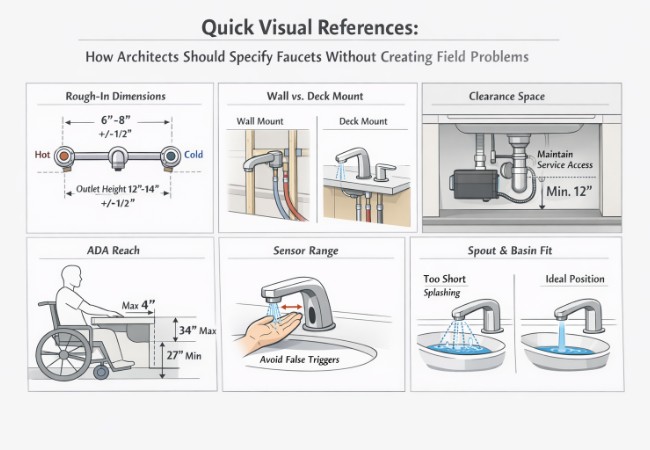
  • Incorrect Rough-In Dimensions: Discrepancies between rough-in dimensions laid out by architects and engineers may lead to additional costs for rework or modification of plumbing systems.
  • Code Violations: Non-compliance with codes involving plumbing may lead to project delays, penalties, or re-designs. The installation of the plumbing system may call for conformity with national or local standards. This could include the IPC or the Uniform Plumbing Code.
  • Inconsistent Specifications: Lack of consistency in the specifications of the architectural and MEP plans may confuse when installed, thereby resulting in errors. Consistent specifications and effective communication are essential to ensure the proper product is installed in the correct location.

The Role of Detailed Specifications in Avoiding Problems

Specs need to be well-defined to avoid any issues of coordination. Specs have to be detailed, precise, and consistent, and need to provide all the information regarding the installation process of the faucet. This also needs to have information related to the product, including the type of faucet and performance specs.

Essential Elements of Coordination for the Installation of Faucets

Fixtures Positioning and Use

Among the most essential considerations during the installation of faucets is positioning. The architect should work with the MEP engineer to position faucets at places where they will be operational. For instance, positioning faucets in bathrooms, kitchens, and other places should be done with ergonomic considerations in mind to allow for the interaction radius between the user and the faucet to match ergonomic requirements.

Architectural considerations would be faucet positioning with respect to other fixtures such as sinks, countertops, and mirror placement. These considerations can influence both the function and usability of faucet systems. From the MEP point of view, engineers need to make sure that the water supply distribution has been properly routed to every faucet location and that the water pressure is properly balanced.

Rough-In Sizes and Pipe Routing

The plumbing system rough-in sizes need to be defined early during the project. MEP engineers are also needed to decide where the pipes, valves, or fittings need to be placed. The installation also has to work according to the architectural drawings, which define the position of sinks, countertops, or walls.

Coordination between the architect and engineer will prevent mistakes related to the installation of the plumbing system and help keep the adjustments that might be required during the construction phase to a minimum. Also, the rough-in dimensions have to consider the height of the countertops, the elevated position of the faucets, and water supply lines.

Faucet Types, Materials, and Finish Options

The selection of the correct type, material, and finish of the faucet also becomes a part of this process of specifying. Architects and the MEPP engineer must coordinate to specify the range of the product, which fulfills the criteria of both functionality and looks. FontanaShowers, BathSelect, and JunoShowers offer a variety of models of the faucet with different materials, finishes, and functional specifications.

Faucets come in different materials, from stainless steel and brass to more contemporary designs featuring matte black, gold, and chrome finishes. When selecting the materials and finishes, the aesthetic and longevity of the faucets should never be underestimated. While architects are concerned with the selected finishes that correlate with the theme of the room, engineers emphasize the functional aspects of the faucet, including the pressure of the flow.

Compliance with Regulatory Standards

Plumbing fixtures, such as faucets, need to meet different standards, such as International Plumbing Code (IPC) standards, National Standard Plumbing Code (NSPC) standards, and others. These standards cover all aspects, including water conservation, water pressure, installation of backflow preventers, and materials used in plumbing.

Specifiers have to make sure that the faucets they choose meet these requirements. For instance, the WaterSense rating, which is a program run by the EPA, ensures that faucets conserve water, thereby conserving energy too.

Water Pressure, Flow Rates, and Energy Efficiency

Water pressure and flow rate are important for making faucets function properly. It is necessary for the MEP engineer responsible for designing the plumbing requirements of a building to ensure that the size of the water supply lines to the faucets meets the desirable pressure requirements. Too much or too low pressure can lead to inefficient performance or damage to the faucet.

Energy efficiency is another consideration, particularly in commercial projects. Low-flow faucets and water-saving technologies can significantly reduce water consumption, aligning with sustainability goals and regulations such as the California Green Building Standards Code (CALGreen).

Vandal Resistance and Durability

In public and commercial settings, vandal-resistant functionality is considered a key factor in guaranteeing that faucets last long. Most of the faucets preferred for commercials have been made to be vandal-resistant. Requirements ought to cover these needs to ensure that the faucets are able to resist heavy flow.

FontanaShowers and BathSelect both offer a range of faucets designed with vandal-resistant features, such as lockable covers, stainless steel housings, and reinforced internal mechanisms. Specifiers should verify that the selected faucets are suitable for the intended environment and will stand up to the wear and tear of daily use.

Best Practices in Coordination and Workflow Management

Documentation and Communication

Having effective communication is a basis for successful coordination of installing faucets. The following people should be able to access information:

  • Architectural Drawings: These should clearly indicate faucet locations, dimensions, and installation clearances.
  • MEP Drawings: Plumbing system drawings should specify pipe routing, valve placement, and water supply details.
  • Product Submittals: Detailed product specifications from manufacturers like FontanaShowers and BathSelect should outline faucet models, finishes, installation guidelines, and performance data.
  • O&M Manuals: These manuals provide important information about maintenance, troubleshooting, and product care.

Similarly, through ensuring that all members of the team are working with the same set of specifications and drawings, pre-construction challenges can be identified for correction.

Regular Site Inspections and Coordination Meetings

Regular inspections at the site and coordination meetings are necessary for the resolution of any issues that may be encountered during the course of installation. Regular meetings between the architects and the MEP engineers along with the contractors are necessary for monitoring the process and making any necessary changes. This is helpful for the detection of any differences between the design and the installation.

Conclusion

Proper optimization between architecture and MEP is a critical step towards the effective installation of faucets. Starting from where such fixtures are placed, their sizes, as well as compliance with standards, each step is vital. An appropriate strategy regarding documentation, communication, and management would make it easier for architects, engineers, and specifiers to ensure that the installation of faucets becomes efficient, focusing on functionality and aesthetic requirements based on industry standards.

No responses yet

Leave a Reply

Your email address will not be published. Required fields are marked *

Latest Comments

No comments to show.