Brushed Nickel Faucet & Vessel Bowl Design for Refined Bathroom Interiors
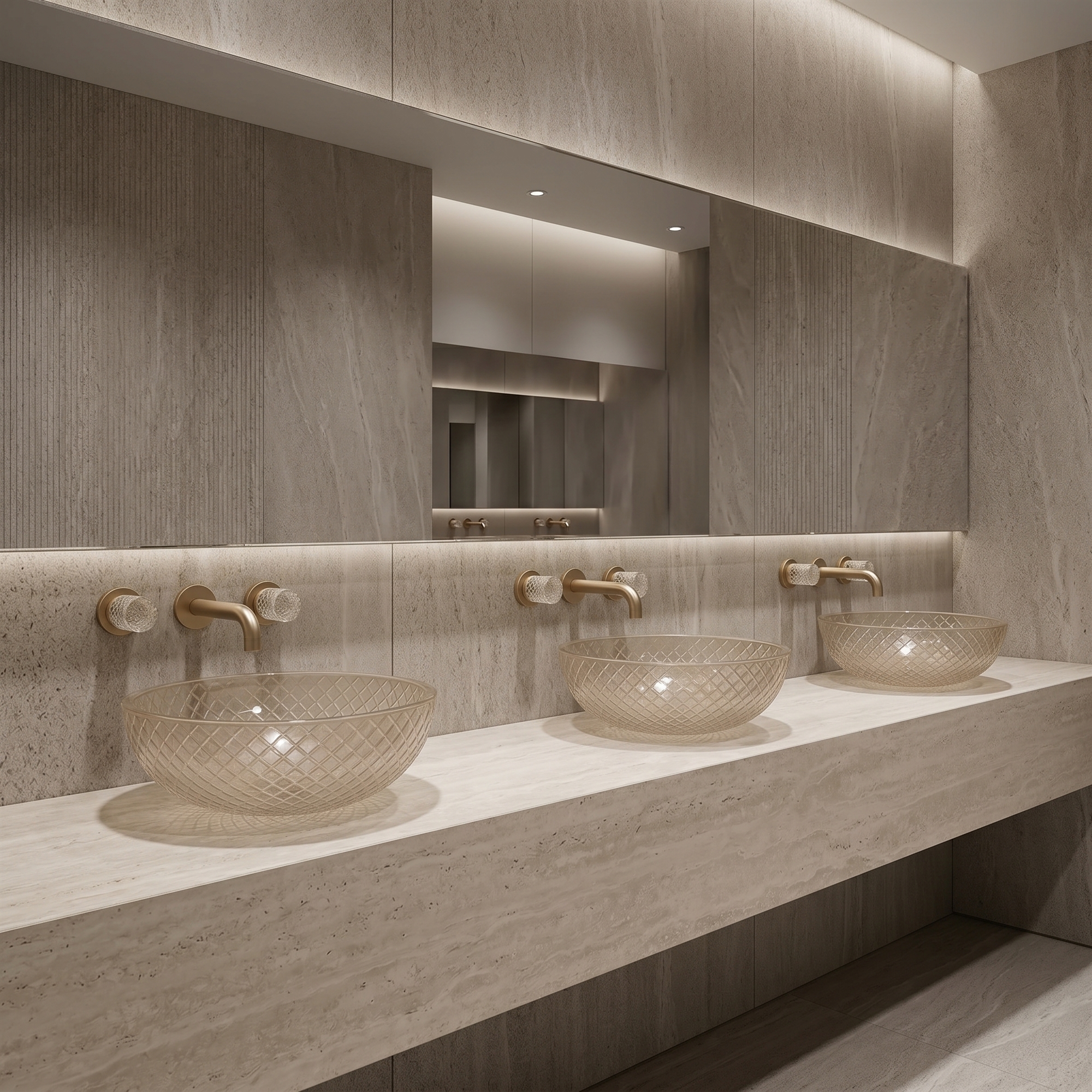
The Fontana Cylindra FS10018BN combines a wall-mounted dual-handle faucet with a round countertop vessel sink. Its brushed nickel finish, sculptural basin geometry, and wall-mounted configuration make it relevant to hospitality, luxury residential, executive, and specification-led bathroom environments.
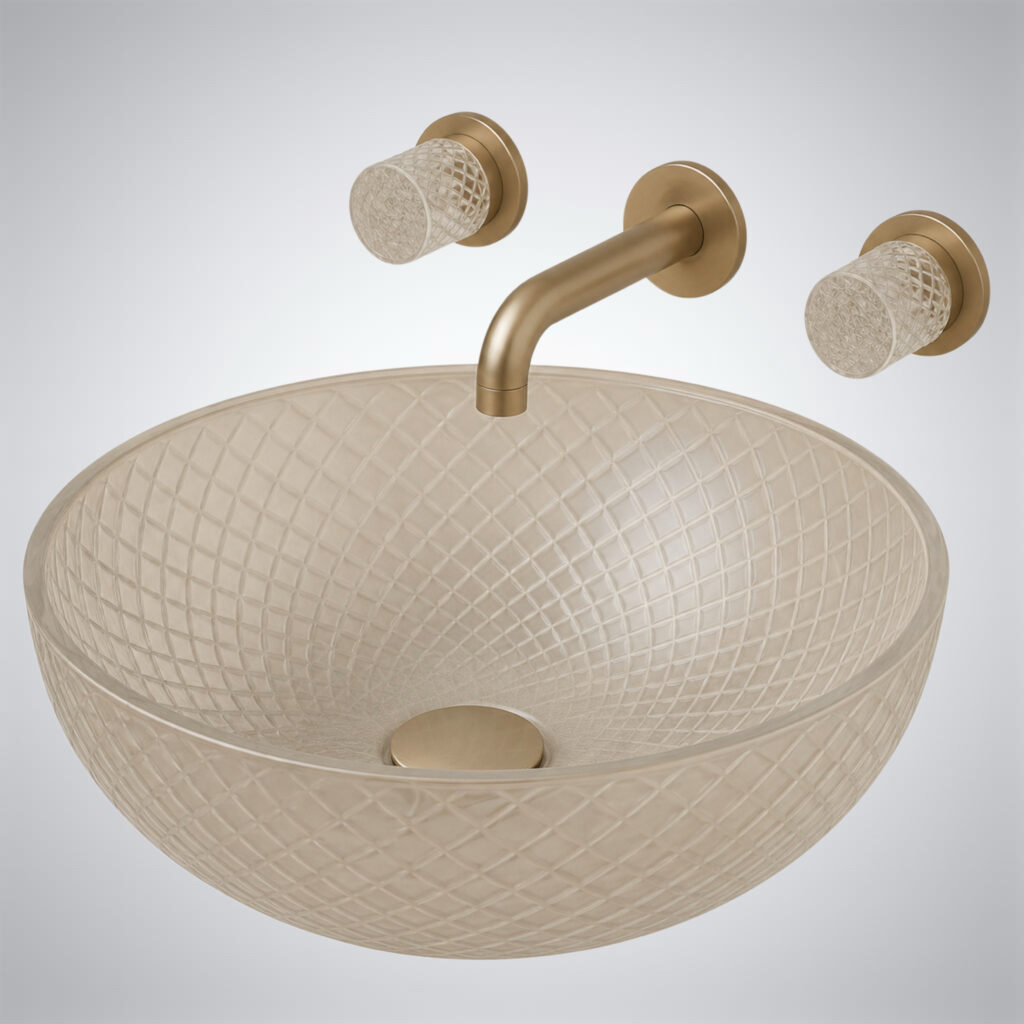
Cylindra Wall-Mount Faucet With Vessel Sink
The wall-mounted faucet helps keep the countertop visually open while the round vessel basin creates a stronger architectural focal point. Prime brushed nickel provides a softer metallic appearance than polished chrome and can coordinate comfortably with stone, porcelain, wood, and satin architectural hardware.
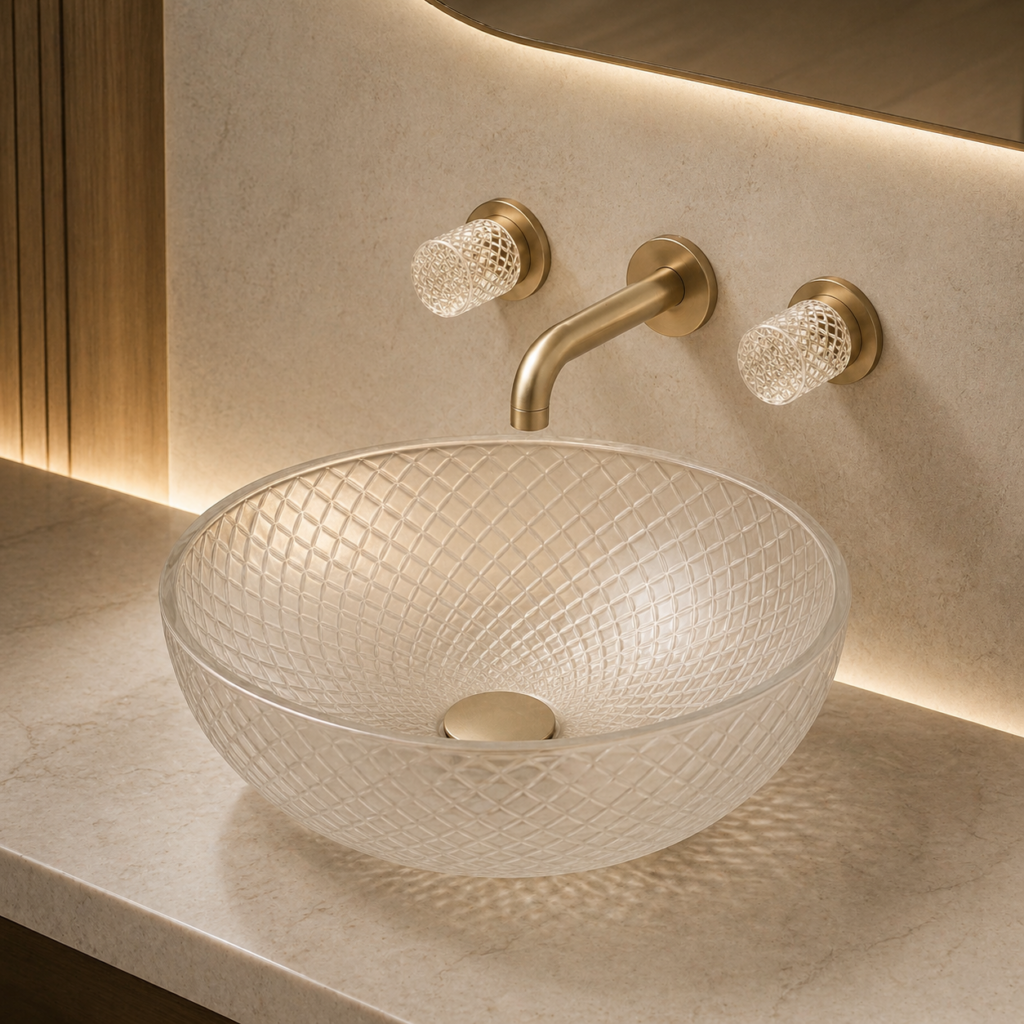
A Softer Metallic Palette for Contemporary Bathrooms
Brushed nickel reduces the strong reflections associated with polished metal. This allows the faucet to support nearby stone, mirrors, wall finishes, casework, and lighting rather than competing visually with them.
Designing the Faucet and Vessel Sink as One Assembly
A wall-mounted faucet and vessel sink should be coordinated as a complete composition rather than selected independently. The finished bowl rim establishes the working elevation, while faucet projection determines where the water stream enters the usable portion of the basin.
Architects should establish the faucet centerline, basin center, backsplash, mirror, drain position, and countertop edge before fabrication drawings are approved. This reduces the possibility of awkward reach, excessive splash, restricted cleaning access, or field modification to completed stonework.
Wall-mounted fixtures also shift important installation work into the wall. The plumbing team therefore needs an accurate finished-wall reference, sufficient structural support, correct valve depth, and coordination with waterproofing, tile buildup, and access requirements.
On hospitality and multifamily projects, repeating the same relationship across many guestrooms or units makes dimensional control especially important. A coordinated mock-up can help establish the preferred faucet projection, basin position, mirror relationship, and countertop setback before the design is repeated throughout the project.

Understanding Brushed Nickel in the Vanity Material Palette
Brushed nickel has visible directional texture and lower surface reflectance than polished chrome. In an architectural bathroom, those characteristics can soften the visual relationship between metal fixtures and highly reflective mirrors, glazing, polished stone, or glossy tile.
Finish names alone should not be treated as proof of an exact color match. Nickel tone, brushing texture, coating system, and light temperature can vary between products. For finish-critical projects, compare physical samples alongside the actual countertop, tile, hardware, and lighting specification.
A finish board viewed under the project’s intended lighting can reveal differences that are difficult to judge from digital photography alone. This is particularly valuable when faucet, accessory, cabinet-hardware, and door-hardware packages come from different manufacturers.
Four Decisions to Resolve Before Installation
These items directly affect visual alignment, splash control, wall coordination, countertop fabrication, and future service access.
Spout Projection
Coordinate the outlet with the internal basin area so water lands comfortably inside the bowl rather than too close to its rear wall or front edge.
Wall Rough-In
Confirm valve depth against wallboard, waterproofing, tile thickness, substrate buildup, and the final finished wall plane.
Basin Placement
Review the vessel footprint against countertop depth, edge setback, drain centerline, backsplash clearance, and usable handwashing area.
Maintenance Strategy
Preserve reasonable access to supply valves, drain components, faucet service parts, and concealed plumbing that may require future inspection.
Pre-Construction Coordination Checklist
The FS10018BN product configuration combines a wall-mounted dual-handle faucet with a round countertop vessel sink. Before procurement or installation, the design team should confirm current dimensional drawings, installation requirements, rough-in positions, and finish conditions for the specific project.
For repetitive installations, record the approved faucet centerline, outlet height, vessel position, finished-wall plane, and countertop coordinates in the interior elevation or enlarged plumbing detail. Consistent dimensional references can reduce variation between rooms.
Where tile joints or stone panel modules form part of the design, coordinate the faucet penetrations with those modules before rough-in. Small shifts made at this stage can improve both the visual elevation and the quality of final installation.
Where This Configuration Works Well
A round vessel basin paired with a wall-mounted faucet can suit boutique hotels, executive suites, private residences, wellness environments, hospitality lounges, and feature powder rooms where the vanity is intended to function as a visible design element.
Removing the faucet body from the countertop also allows more of the vanity surface to remain visually uninterrupted. This can emphasize premium stone, solid-surface material, or custom millwork while creating a lighter overall composition around the basin.
Designers should still consider housekeeping procedures and cleaning clearances around the rear of the vessel. A visually minimal arrangement is most successful when the surrounding surfaces remain practical to clean and the drain and supply systems remain serviceable.
In commercial or hospitality projects, a full-scale vanity mock-up can help validate bowl placement, faucet projection, mirror height, lighting relationships, backsplash details, and user comfort before the same design is repeated across multiple rooms.
Architect & Contractor FAQs
Is FS10018BN a wall-mounted faucet configuration?
Yes. The product configuration is designed around a wall-mounted faucet paired with a countertop vessel basin, making wall rough-in coordination particularly important before finishes are installed.
Why should the faucet and vessel basin be coordinated together?
Faucet reach, outlet height, basin depth, rim position, and drain location collectively determine the usable washing area. Coordinating them together helps improve visual alignment and can reduce unnecessary splashing.
What should be coordinated before closing the wall?
Verify faucet centerlines, concealed valve positioning, finished-wall depth, structural support, supply routing, waterproofing, tile buildup, and any manufacturer-specific rough-in requirements.
Can brushed nickel from different manufacturers look different?
Yes. Tone, brushing direction, texture, coating, and surrounding lighting may create noticeable differences. Physical finish samples are useful where exact coordination with accessories and architectural hardware is required.
Should the countertop be fabricated before fixture dimensions are confirmed?
No. The vessel footprint, drain opening, countertop setback, bowl location, surrounding clearances, and overall faucet relationship should be confirmed before fabrication is released.
Does a wall-mounted faucet simplify countertop design?
It can reduce faucet penetrations through the countertop and create a cleaner surface around the vessel. However, the tradeoff is greater coordination inside the wall for the faucet rough-in and plumbing components.
What should be checked to reduce splash around a vessel sink?
Review the relationship between faucet projection, water outlet elevation, bowl depth, bowl curvature, drain location, and operating water flow. The water stream should enter a useful central portion of the basin rather than striking close to an internal wall.
What should facilities teams consider after installation?
Access to drain connections, shutoff valves, faucet service components, and concealed service points should be considered during design so future maintenance does not require unnecessary removal of finished surfaces.
Coordinate the Faucet, Vessel & Wall as One Detail
Finalize basin placement, faucet centerlines, wall depth, drain geometry, finish selection, and maintenance access before releasing the vanity package for fabrication and installation.
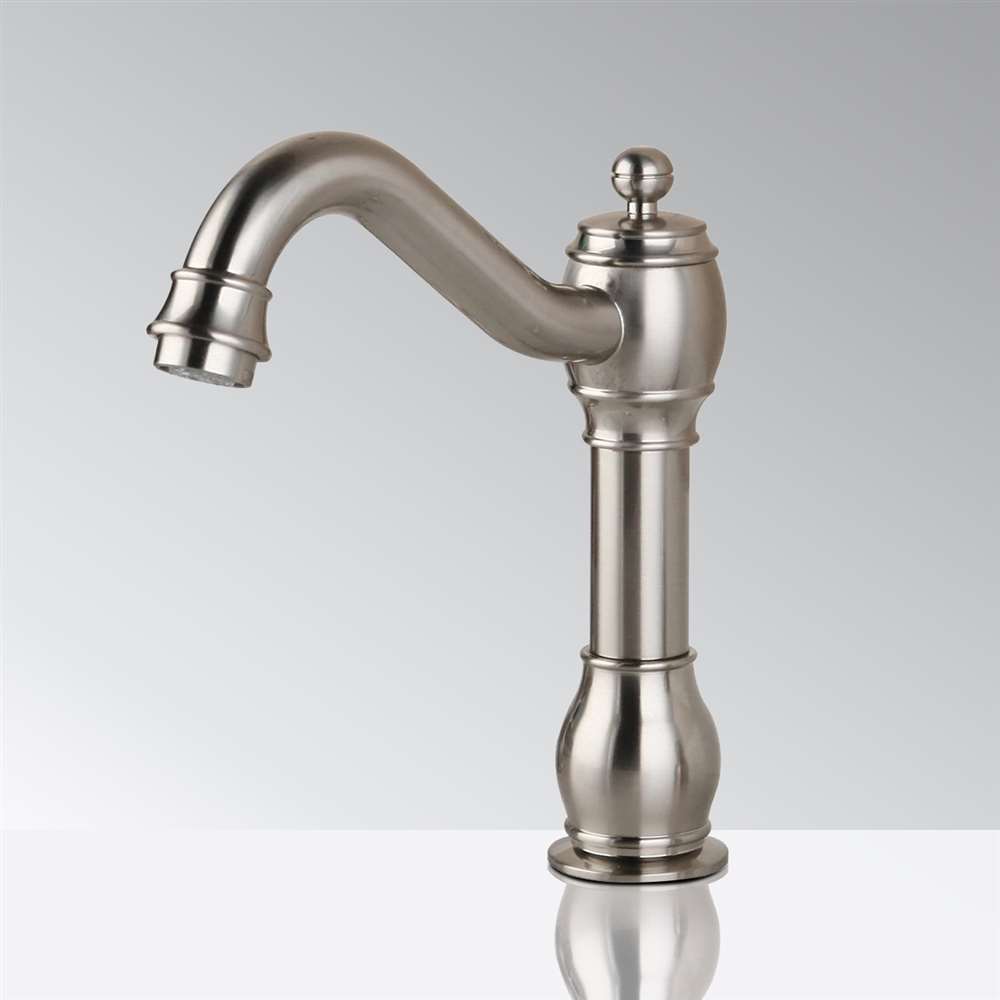
FontanaNiro AquaSense™ Brushed Nickel Commercial Touchless Faucet
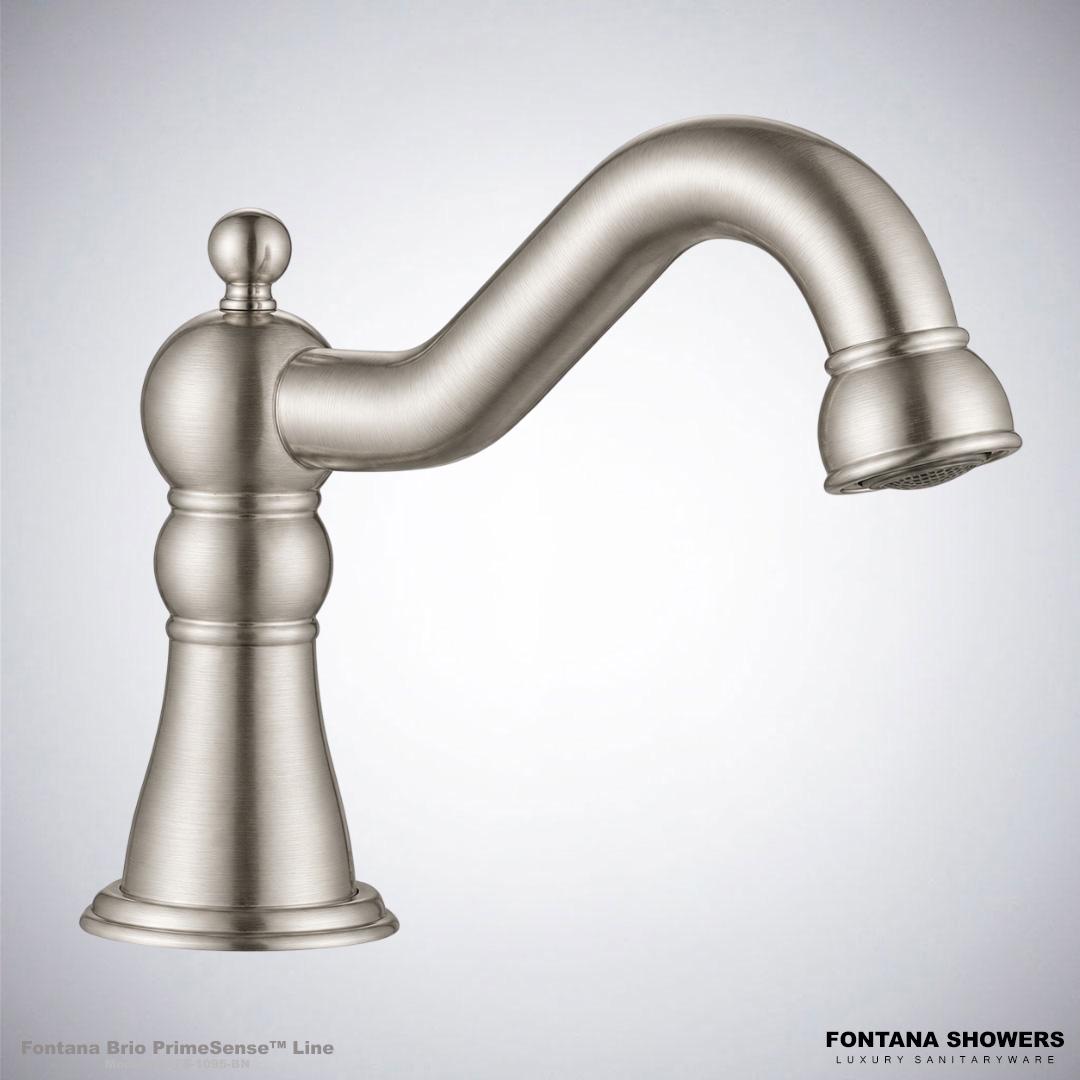
Fontana Napoli Brushed Nickel Commercial Touchless Sensor Faucet

Fontana Freestanding Brushed Nickel Commercial Automatic Sensor Faucet

Fontana Brushed Nickel Commercial Automatic Sensor Faucet

Fontana Contemporary Brushed Nickel Commercial Sensor Faucet