
Wall-Mount vs. Deck-Mount Commercial Faucets: Rough-In, Basin Geometry & Maintenance
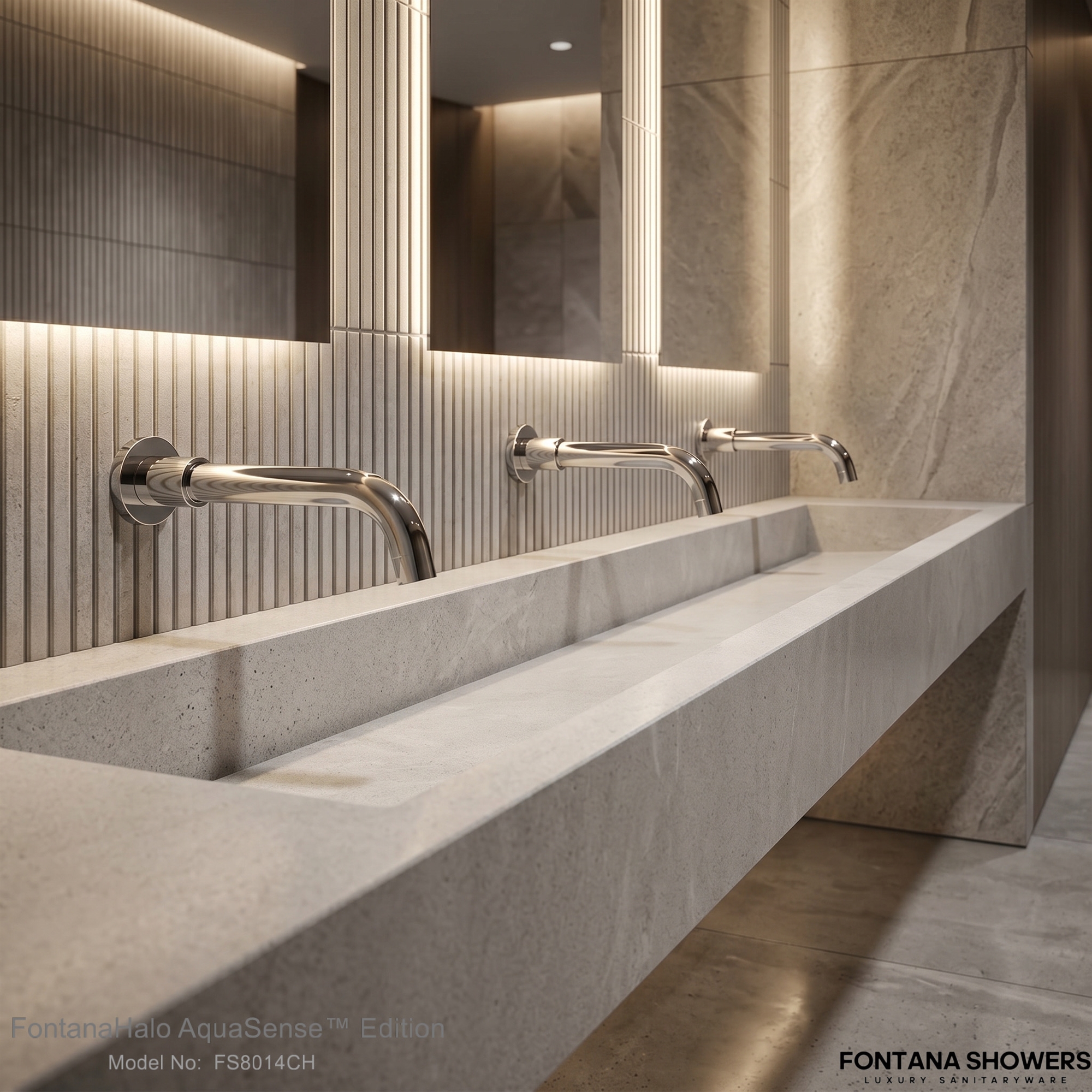
Wall-mounted commercial faucets create cleaner counters and greater architectural freedom, but they place more responsibility on early coordination. Deck-mounted faucets generally simplify rough-in, renovation and future replacement. For architects and MEP engineers, the decision should be based on wall construction, basin geometry, stream landing, service access and lifecycle flexibility—not appearance alone.
Wall-Mount vs. Deck-Mount at a Glance
| Criterion | Wall-Mount | Deck-Mount |
|---|---|---|
| Clean countertop | Excellent | Good |
| Retrofit flexibility | Moderate | Excellent |
| Rough-in precision | Critical | Moderate |
| Vessel/custom basins | Excellent | Model dependent |
| Future replacement | More constrained | Easier |
| Concealed-plumbing coordination | High | Lower |
Commercial Platforms Worth Reviewing
| Product | Mounting | Specification Lesson |
|---|---|---|
| Fontana Automatic Brushed Nickel Sensor Faucet | Wall | Concealed coordination + commercial brass |
| BathSelect BS1098-MB | Deck | Retrofit flexibility + high-traffic design |
| Sloan BASYS EFX-850 | Wall | Wall mount with strong service access |
| KOHLER Kumin | Deck | Compact footprint + concealed sensor |
| Zurn ZG6922 | Wall | Published projection + advanced valve architecture |
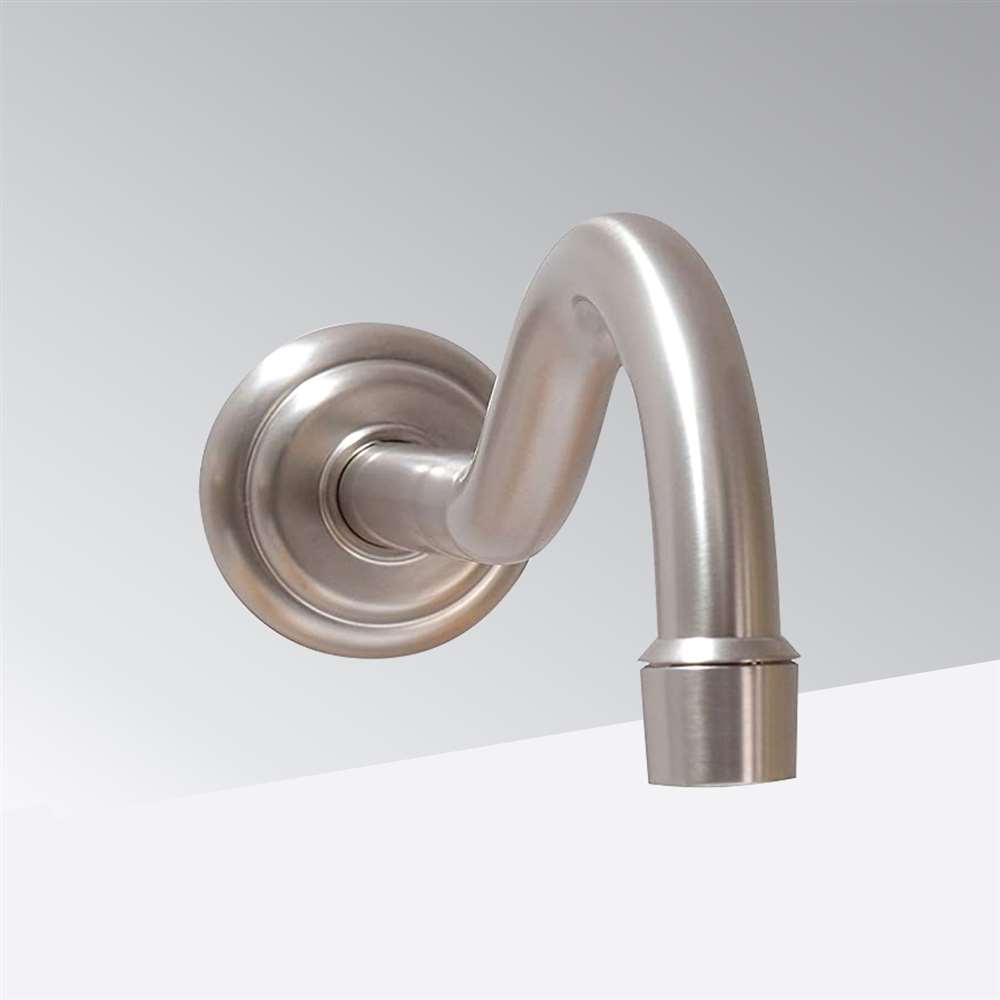
Fontana Commercial Automatic Wall-Mount Brushed Nickel Sensor Bathroom Faucet
The Fontana Commercial Automatic Wall-Mount Brushed Nickel Sensor Bathroom Faucet is a useful example of how touchless technology can be incorporated into a traditional architectural wall-mounted form.
Its brass construction, ceramic valve core and AC/DC architecture make it relevant to airports, office buildings and large public restroom projects where wall mounting is part of the design language.
Clears the counter while maintaining a refined, familiar faucet silhouette.
Finished-wall depth and outlet centerline must be established before wall closure.
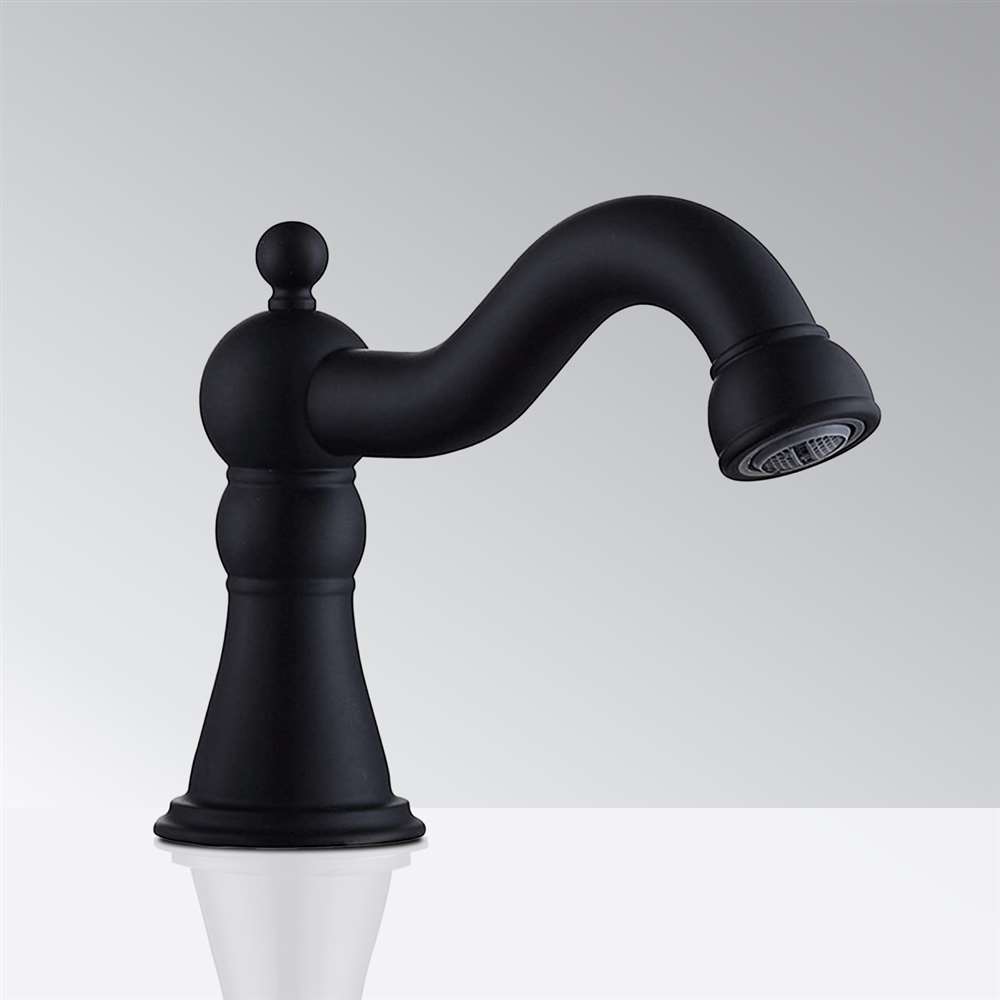
BathSelect™ Deck-Mount Commercial Matte Black Touchless Sensor Faucet
BathSelect’s deck-mounted commercial platform illustrates why this mounting type remains attractive for renovation and standardized restroom programs.
The faucet installs through a conventional single-hole deck condition while maintaining commercial touchless operation and optional hot/cold mixing.
Changing the faucet later generally does not require opening a finished wall.
Excessive countertop setback can move the stream too close to the basin rear wall.
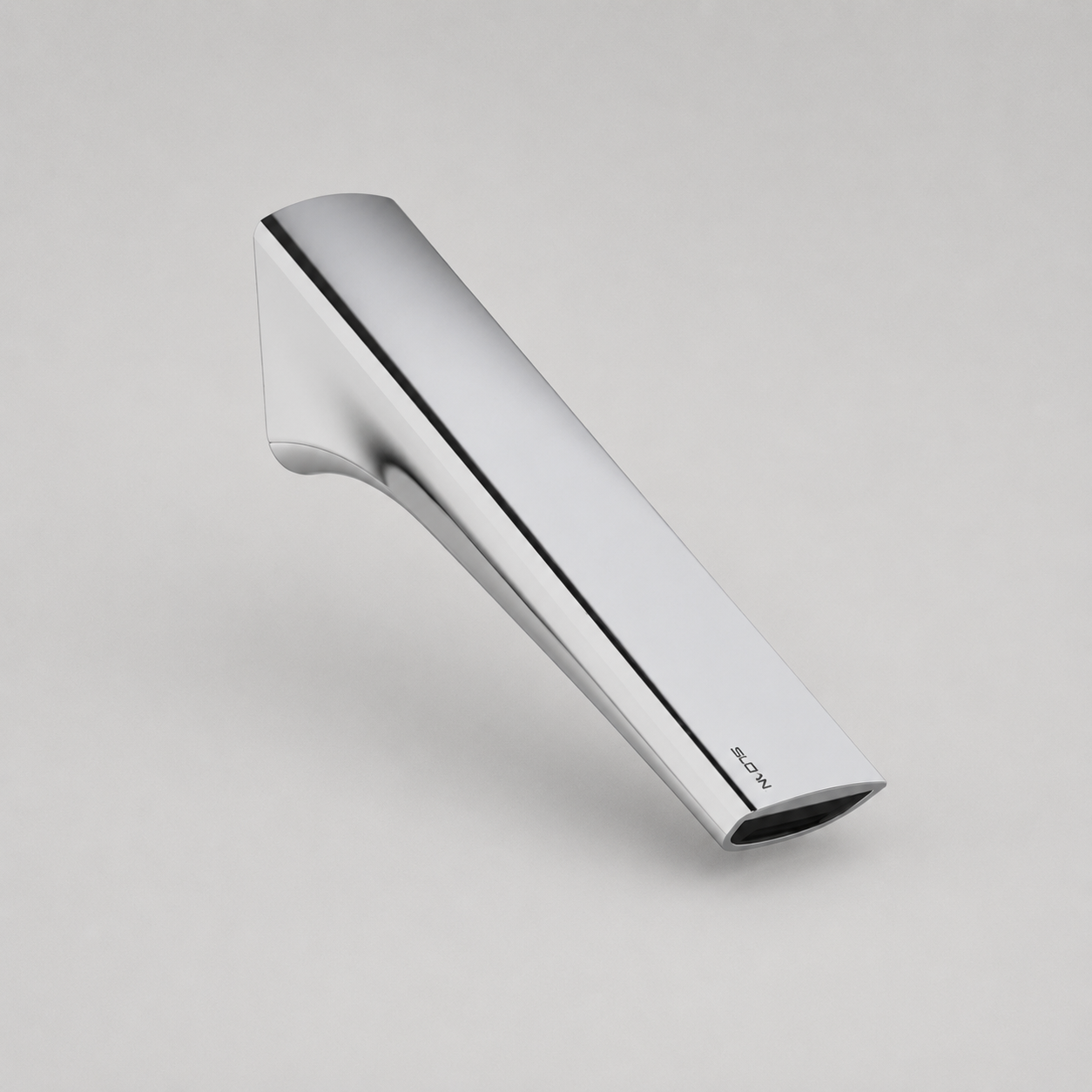
Sloan BASYS® EFX-850 Wall-Mounted Commercial Sensor Faucet
BASYS EFX-850 is valuable to architects because it addresses a common concern with wall-mounted fixtures: serviceability.
Sloan combines wall mounting with one-tool servicing, an integral water shutoff, above-deck serviceable strainer, diagnostic indicators and a vandal-resistant outlet.
Wall-mounted appearance with unusually mature institutional maintenance architecture.
Wall flange, supply location and service zone still need accurate detailing.
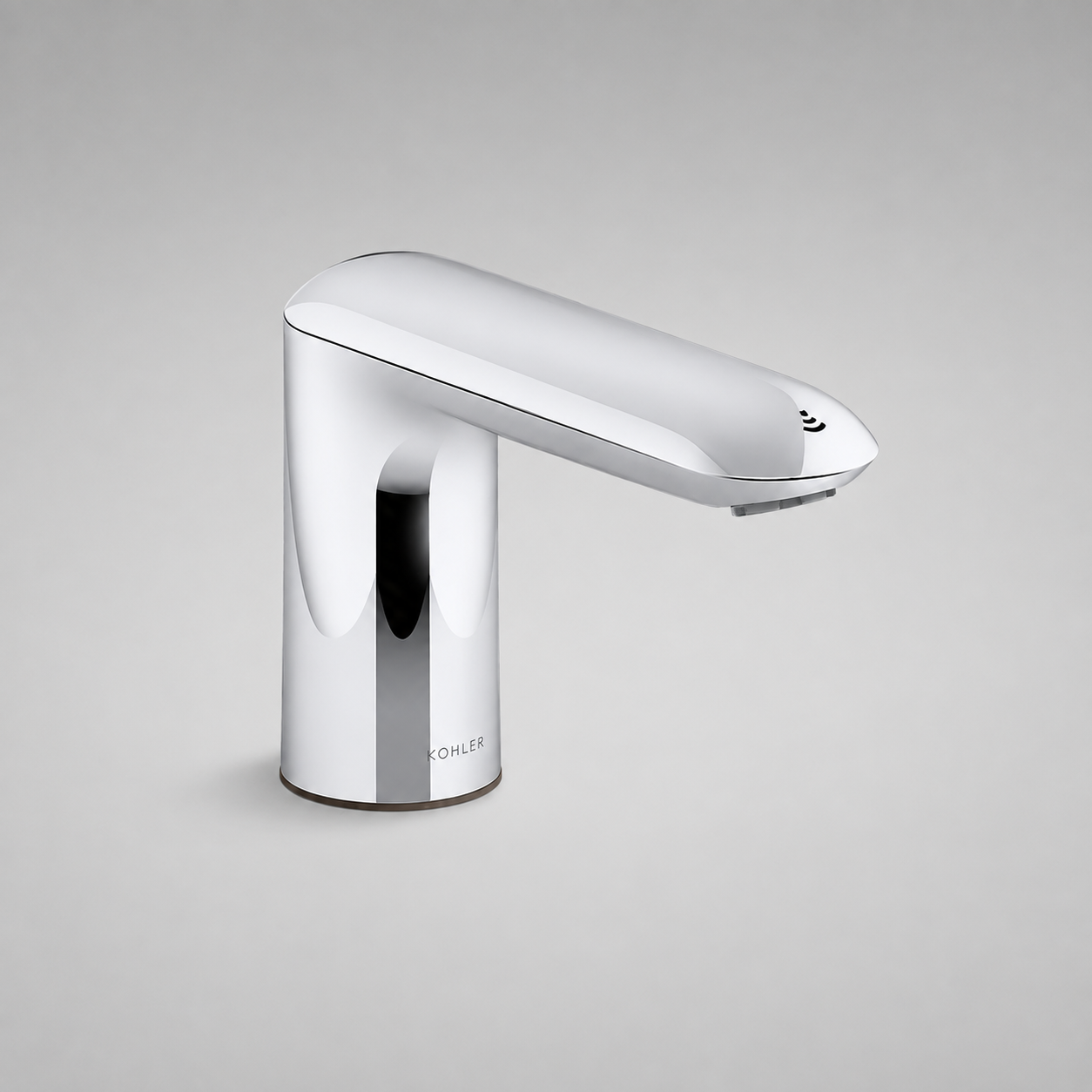
KOHLER Kumin® Touchless Single-Hole Faucet with Kinesis® Sensor
Kumin demonstrates how deck mounting can still produce a very clean architectural footprint. KOHLER conceals the Kinesis sensor inside the spout while locating the valve below the counter.
The current platform publishes approximately 135 mm overall length and a 0.5 GPM maximum flow.
Compact visible footprint without requiring concealed wall rough-in.
Below-counter valve and service space must remain clear of millwork and waste piping.
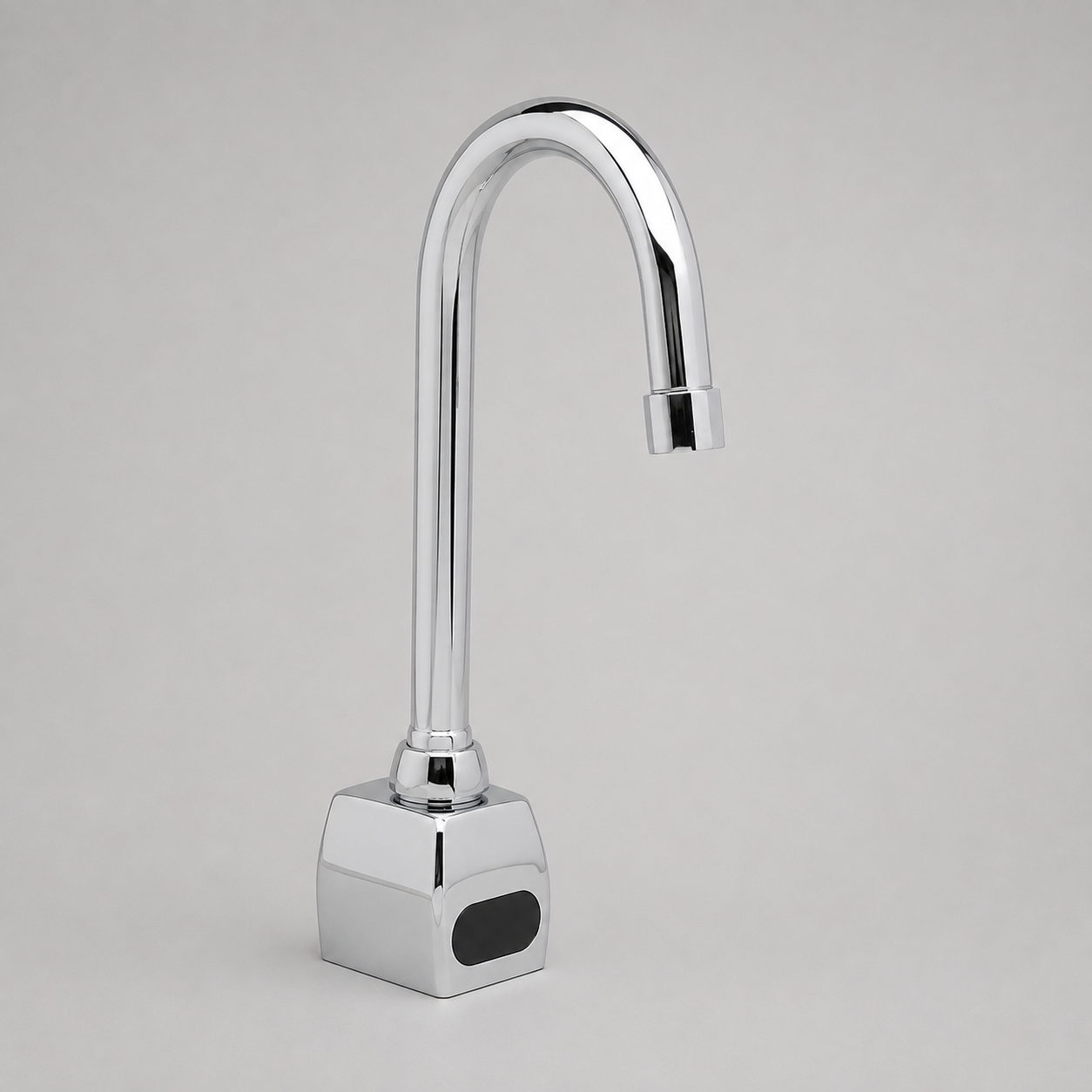
Zurn AquaSense® ZG6922 Wall-Mount 5-3/8-Inch Gooseneck Sensor Faucet
ZG6922 is particularly useful for architectural coordination because Zurn identifies the wall-mounted spout as a defined 5-3/8-inch projection rather than leaving reach as an afterthought.
The platform also replaces the conventional solenoid with a gear-driven ceramic cartridge and offers Bluetooth-adjustable settings and optional hydropower.
Published projection makes faucet-to-basin section coordination more deliberate.
Projection must be checked against the actual bowl—not simply countertop depth.
Image requirement: each product image is configured at 500+ px desktop width, displayed uncropped with object-fit:contain, and the full image is clickable to the corresponding manufacturer page.
Four Dimensions Architects Should Lock Before Wall Closure
| Finished-wall thickness | Include tile, stone, substrate, waterproofing and backing. |
| Spout centerline | Dimension from the final basin—not structural framing. |
| Projection | Confirm where the water stream intersects the bowl. |
| Service access | Do not permanently bury required valves, controllers or filters. |
The Stream Landing Point Is the Real Design Dimension
Architectural elevations often show the faucet centered beautifully above the lavatory while ignoring where the water actually lands.
| Condition | Potential Problem |
|---|---|
| Outlet too close to rear wall | Splash and awkward hand position |
| Outlet directly over drain | Noise and splash rebound |
| Outlet too near front rim | Water escape potential |
| High outlet + shallow basin | Increased splash energy |
Concealed Does Not Mean Inaccessible
A clean architectural bathroom should not require demolition to change a valve or inspect a controller.
For wall-mounted fixtures, identify access panels or accessible control locations during design. For deck-mounted fixtures, protect below-counter service space from drawers, trash receptacles, traps and vanity framing.
Where Each Mounting Type Makes the Most Sense
Specify Wall-Mount When…
Design uses integrated stone, vessel basins, minimal countertops, luxury hospitality detailing or a strong architectural wall composition.
Specify Deck-Mount When…
The project prioritizes retrofit simplicity, standardized replacement, conventional lavatories or flexible future fixture changes.
Commercial Faucet Brands Relevant to Mounting Coordination
Wall-Mount vs. Deck-Mount Faucet FAQ
Which mounting type gives architects more design freedom?
Wall mounting generally provides more freedom with custom basins and continuous countertops because the faucet location is independent from deck penetrations.
Which is easier for renovation?
Deck mounting usually wins because existing countertop or sink holes can often be reused without opening the finished wall.
Should wall-mounted faucets have access panels?
Required control, mixing and service components should remain accessible; the exact solution depends on the faucet architecture and wall assembly.
What is the most important dimension?
For functional performance, the relationship between outlet position and stream landing zone is more important than the faucet’s visual centerline alone.
Which mounting type is easier to clean around?
Wall mounting removes the faucet base from the countertop and can simplify daily surface cleaning.
Should architects build a mock-up?
For highly repeated or premium installations, yes. The mock-up should test sensor activation, splash, stream landing, finish and service access.
Professional References
ADA Standards for Accessible Design
Coordinate accessible lavatory height, clearances, reach and operable components.
ASME A112.18.1 / CSA B125.1
Core plumbing-supply-fitting performance framework.
American Society of Plumbing Engineers
Commercial plumbing design and coordination resources.
International Code Council
Building and plumbing code resources relevant to commercial installations.
Whole Building Design Guide
Whole-building design, maintainability and systems-coordination guidance.
Wall-Mount Wins Design Freedom; Deck-Mount Wins Adaptability
Wall-mounted faucets create cleaner counters and offer exceptional freedom with integrated and custom lavatories, but they require accurate early rough-in and deliberate service planning. Deck-mounted faucets preserve greater retrofit and replacement flexibility. The right architectural decision is therefore not based on appearance alone—it is based on how the faucet, basin, wall, plumbing and maintenance strategy work together.
Review Fontana Commercial Wall-Mount Faucet →Independent editorial disclosure: ArchFaucets.com provides independent architecture and specification-oriented analysis. Verify exact current dimensions, finish, flow, power, mixing, certifications and installation requirements from the selected manufacturer submittal before approval.