

Commercial Faucet Submittal Checklist for Architects: 20 Items to Verify Before Approval
A commercial touchless faucet submittal should prove that the exact fixture being purchased matches the design intent, plumbing requirements, electrical infrastructure, accessibility strategy and long-term maintenance needs of the project. Approving a manufacturer family name or catalog image is not enough.
This twenty-point checklist gives architects, plumbing engineers and specification teams a practical framework for reviewing commercial sensor faucet submittals before marking them “Approved” or “Approved as Noted.”
Approve the Exact Assembly—not the Product Family
Electronic faucet manufacturers often offer multiple configurations under one product family: different GPM outlets, power kits, finishes, mixing valves, thermostatic options, sensing technologies and control boxes.
What Architects Should Verify Before Approval
Exact Model Number
Confirm every prefix, suffix and option code. A missing suffix may change power, flow, finish, mixing or certification.
Exact Finish
Verify manufacturer finish name and finish code—not simply “chrome,” “gold,” “nickel” or “black.”
Flow Rate
Confirm the exact specified GPM rather than accepting a sheet showing every available outlet option.
Outlet Type
Identify whether the faucet uses laminar, multi-laminar, non-aerating or aerated delivery.
Sensor Technology
Determine whether the faucet uses standard IR, adaptive IR, dual infrared, concealed optical sensing or Time-of-Flight.
Sensor Range
Review published range, automatic calibration and any available field adjustment.
Power Architecture
Battery, AC, DC, hybrid, solar-assisted or hydropower should match the project drawings.
Transformer / Controller
Verify whether the transformer, control box, battery holder or power kit is included or separately required.
Mixing Strategy
Identify pre-tempered supply, mechanical mixing valve, integrated temperature control or thermostatic mixing valve.
Thermostatic Certification
Where point-of-use temperature limiting is required, confirm the applicable ASSE certification rather than assuming every mixer is thermostatic.
Spout Reach
Compare actual projection with basin geometry and countertop setback.
Stream Landing
Review where the water will intersect the finished basin—not simply the faucet centerline.
Mounting Requirements
Confirm hole diameter, deck thickness, wall depth, fastener requirements and mounting hardware.
Service Access
Filters, batteries, controllers, transformers, valves and mixing components should remain accessible.
Filtration
Identify the inlet strainer and confirm its location, mesh size where published and cleaning method.
Automatic Timeout
Confirm maximum continuous runtime and any programmable shutoff settings.
Accessibility
Verify the completed faucet and lavatory assembly against applicable accessibility requirements.
Certifications & Standards
Confirm plumbing fitting, lead-content, accessibility and project-specific performance certifications.
Replacement Parts
Require identifiable replacement sensors, valves, cartridges, filters, power components and outlets.
O&M + Commissioning
The submittal package should explain installation, startup, sensor adjustment, cleaning, maintenance and final commissioning procedures.
What Strong Product Documentation Looks Like
| Product | Submittal Strength | AEC Lesson |
|---|---|---|
| Fontana DuoPure Elite Chrome Edition | Advanced sensor + commercial technical data | Exact sensor and outlet configuration matters |
| BathSelect BS15065 | Sensor, diagnostics + commercial documentation | Do not approve only the faucet body |
| Sloan BASYS EFX-275 | Detailed institutional spec sheet | Service architecture belongs in review |
| KOHLER Kumin Kinesis | Commercial technical + BIM support | Architectural geometry must be checked |
| Zurn ZG6913 | Valve, Bluetooth + power options | Exact suffix changes the complete system |
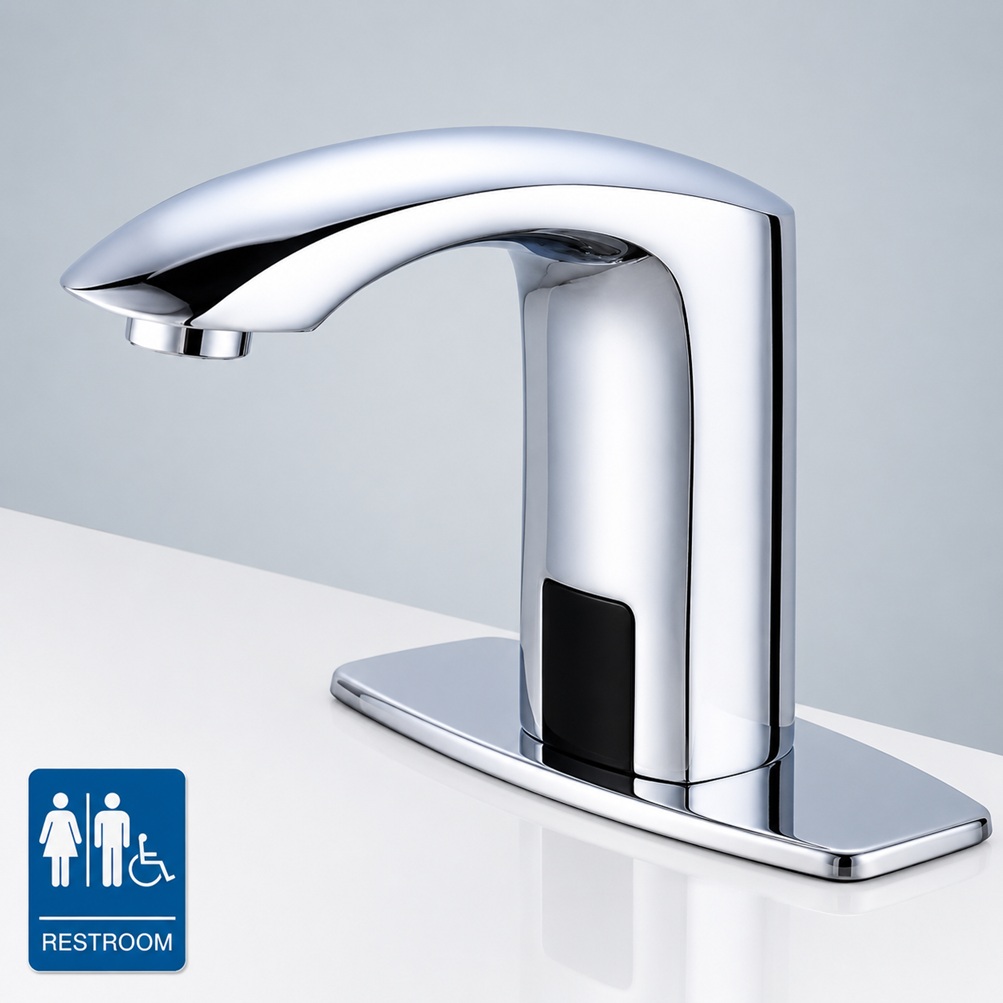
Fontana Tivoli Automatic Hands Free Chrome Finish Sensor Faucet
The Fontana Tivoli Automatic Hands Free Chrome Finish Sensor Faucet is a strong example of why a commercial faucet should be reviewed as a complete operating system rather than approved from appearance alone.
The architect should confirm the exact sensing configuration, power architecture, control assembly, flow outlet and any temperature-control components included in the final purchase package.
Sensor, power, construction and commercial system information can be reviewed together as part of the complete faucet assembly.
Does the submitted configuration include the exact sensor, power components and outlet required by the specification?
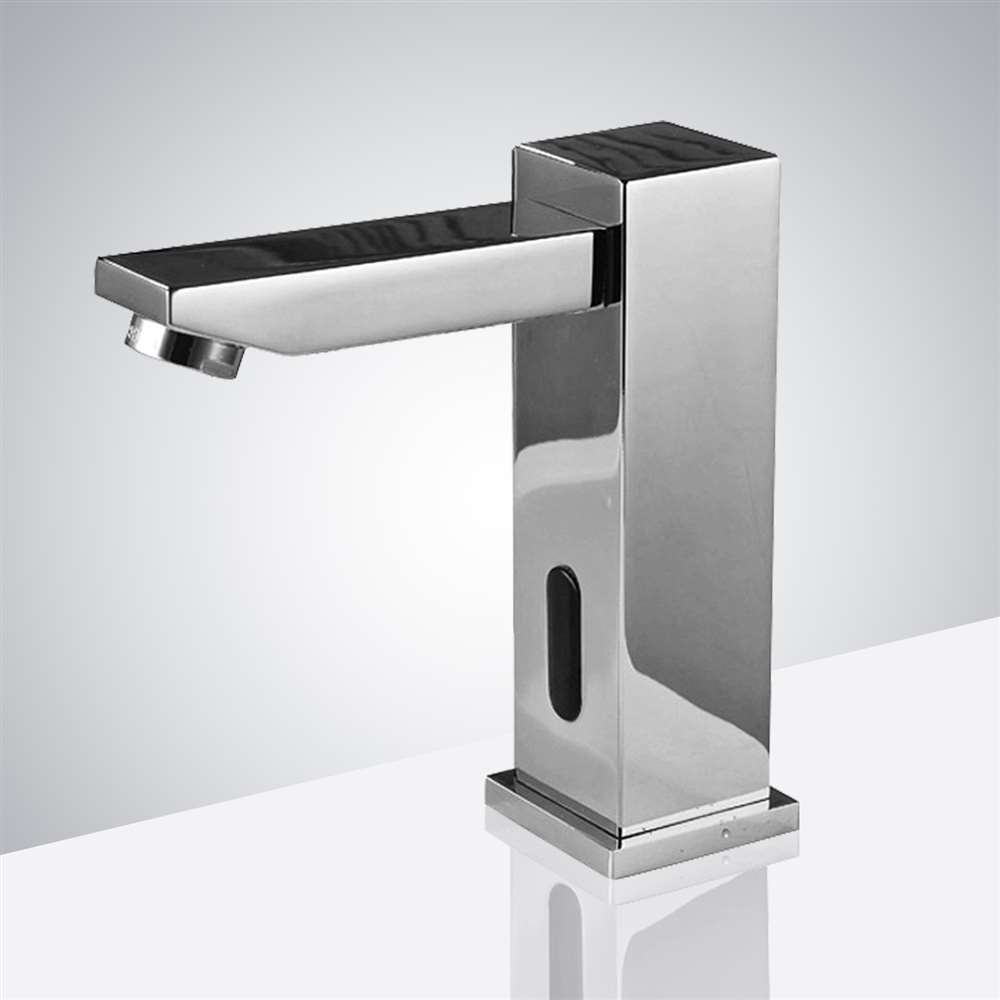
BathSelect™ BS15065 Commercial Time-of-Flight Sensor Faucet
BathSelect’s BS15065 illustrates why the controls package belongs in architectural review. The current commercial system combines sensing, diagnostics, power and filtration rather than functioning as only a decorative spout.
Multiple operating systems can be evaluated as one commercial assembly.
Are controller, power supply, strainer and final flow outlet all included in the submitted package?
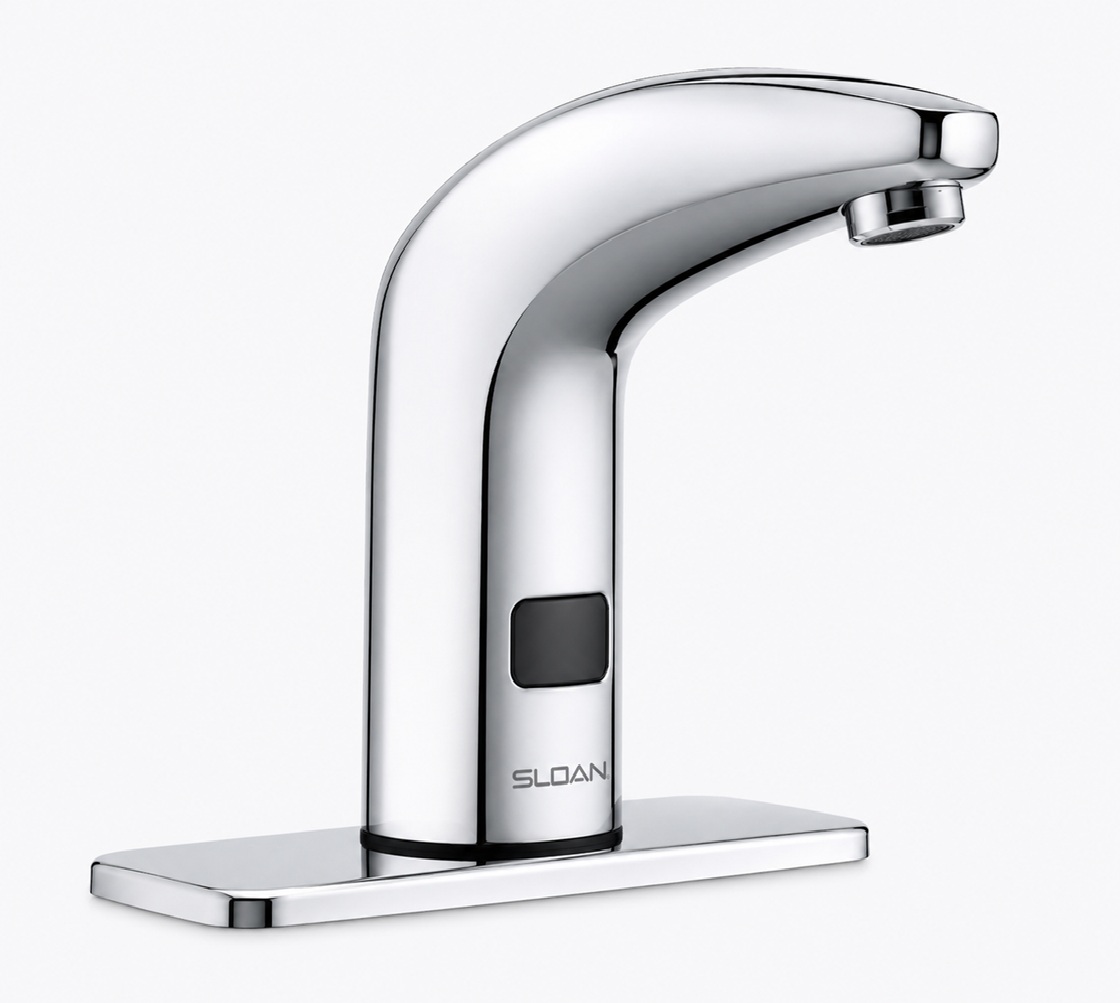
Sloan BASYS® EFX-275 Commercial Sensor Faucet
Sloan BASYS demonstrates what detailed commercial submittal information can look like: sensor architecture, sensing range, electronics protection, diagnostics, service components and flow configuration are all part of the technical review.
Strong component-level documentation supports both design and facility review.
Which BASYS flow, power and mixing configuration is actually being purchased?
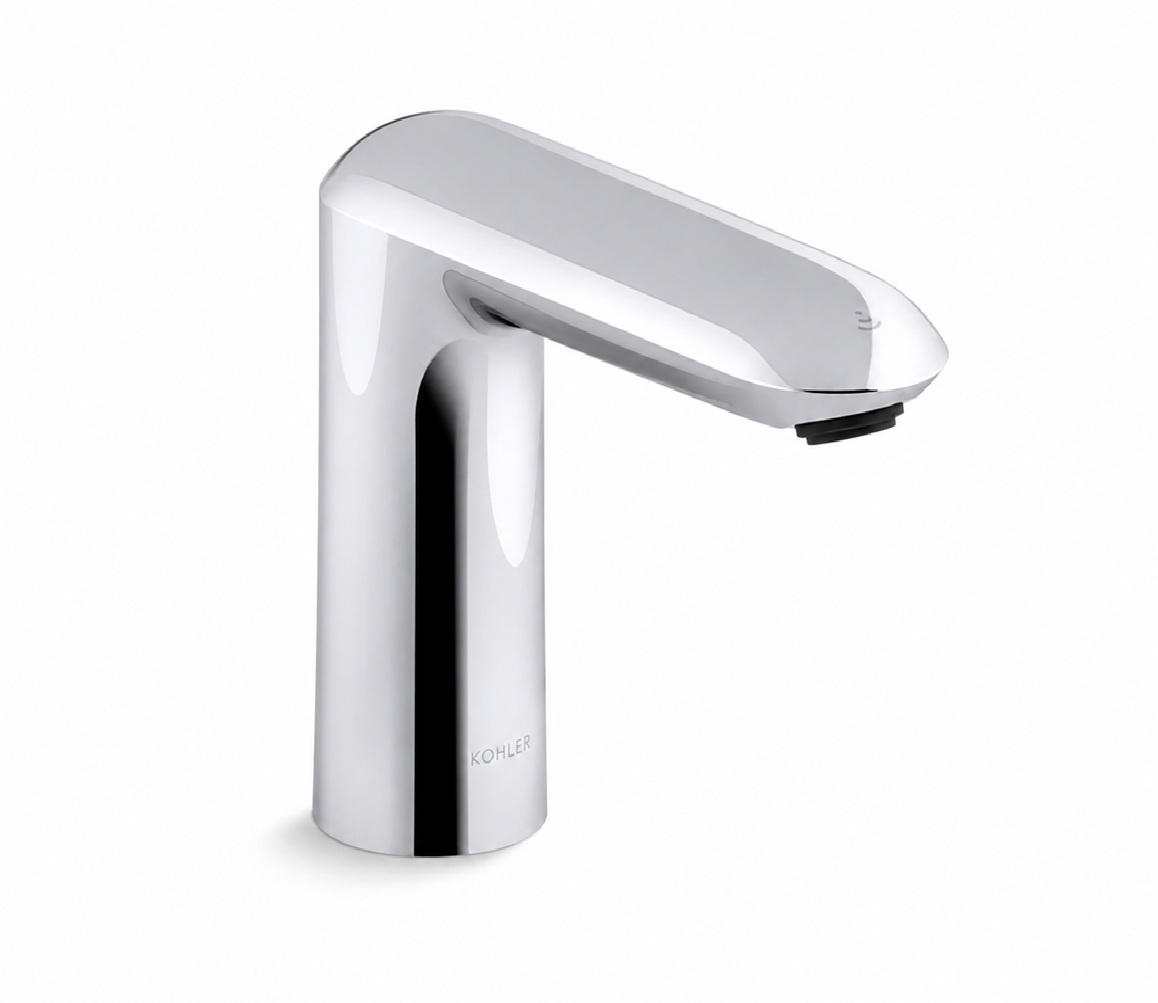
KOHLER Kumin® Touchless Faucet with Kinesis® Sensor
KOHLER’s Kumin demonstrates why architectural dimensions should be reviewed alongside electronic functionality.
Spout reach, mounting geometry and the below-counter valve assembly all affect whether the faucet will coordinate successfully with the specified lavatory and millwork.
Useful dimensional and commercial technical information for faucet-to-basin review.
Has the architect checked actual spout projection against the submitted basin?
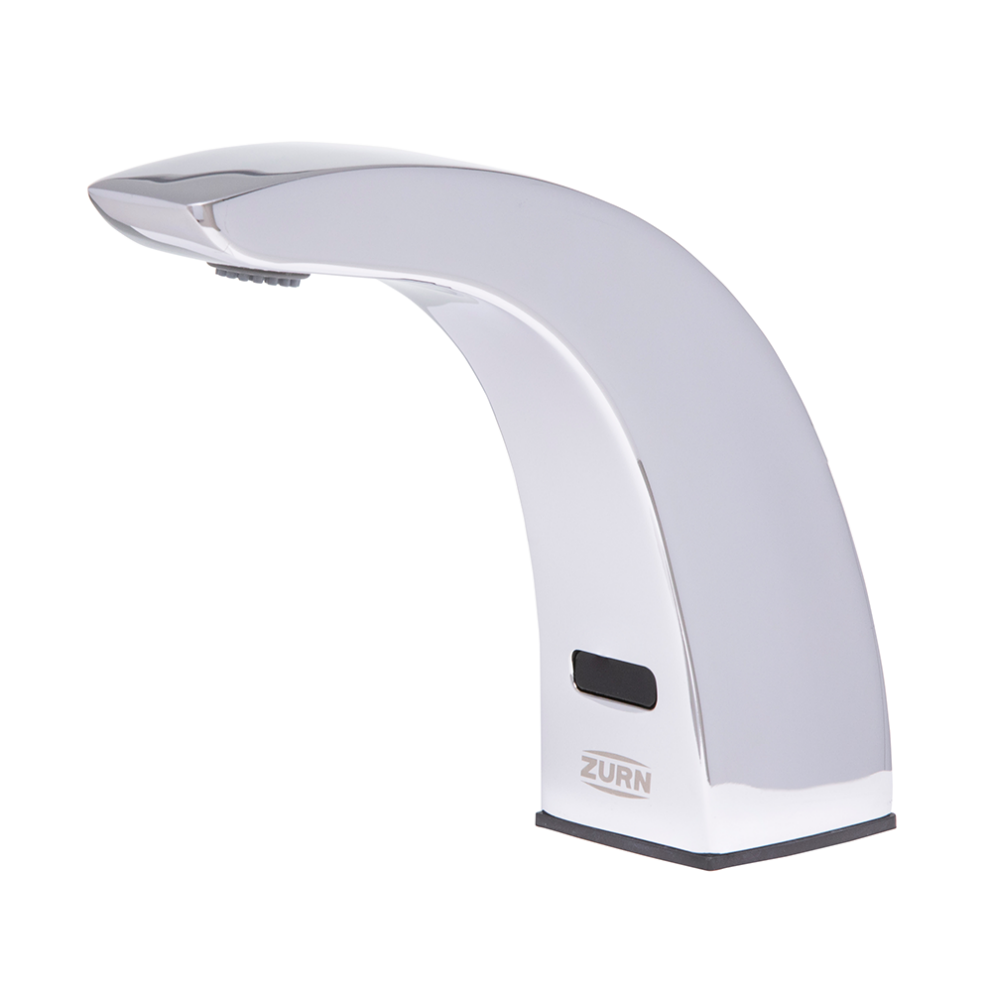
Zurn AquaSense® ZG6913 Gear-Driven Commercial Sensor Faucet
Zurn’s ZG6913 illustrates why product suffixes matter. Power, mixing, flow and connected-control options can materially change the installed system while the visible faucet remains essentially the same.
Extensive configuration choices allow a project-specific commercial assembly.
Does the full model number capture the exact power, mixing, flow and connected-control options?
Three Submittal Conflicts Architects Commonly Miss
The body matches the specification but the supplied outlet is 1.5 GPM instead of the required 0.5 GPM.
The plumbing submittal includes battery operation while the electrical drawings show hardwired power.
The submitted faucet includes a basic mechanical mixer when the design requires certified thermostatic limiting.
A value-engineering substitution uses a different manufacturer’s “brushed gold” that does not match approved samples.
Require the Faucet and Basin on the Same Review Sheet
Architects should not approve faucet dimensions in isolation. The final faucet and lavatory should be reviewed together to verify stream landing, reach, splash potential, sensor zone and maintenance clearance.
“Or Equal” Must Mean Performance Equal—not Visually Similar
A proposed substitution should be compared against the specified faucet’s complete performance profile.
| Substitution Criterion | Compare |
|---|---|
| Flow | Exact GPM + outlet type |
| Sensor | Technology + range + calibration |
| Power | Battery / AC / hybrid / controller |
| Mixing | Manual vs. thermostatic architecture |
| Dimensions | Reach, height, mounting requirements |
| Service | Filter, valve and battery access |
| Finish | Physical sample and exact manufacturer finish |
| Documentation | BIM, specifications, O&M and replacement parts |
A BIM File Does Not Replace Technical Review
BIM can help coordinate mounting location, vanity geometry and clearances, but the model may not contain every critical performance parameter.
Flow, sensor architecture, power, mixing and commissioning requirements should still be reviewed against the manufacturer’s technical documentation.
What Should Go Into the Owner’s Asset Record?
| Manufacturer | Exact brand |
| Model | Complete number including suffixes |
| Finish | Exact finish code |
| Outlet | GPM and replacement part |
| Power | Battery / transformer / controller |
| Sensor | Replacement sensor reference |
| Valve | Solenoid / cartridge reference |
| Filter | Cleaning and replacement procedure |
| Warranty | Coverage period and exclusions |
| O&M | Installation, troubleshooting and maintenance documents |
Commercial Faucet Brands With Specification-Oriented Platforms
Commercial Faucet Submittal FAQ
Can architects approve a faucet family instead of an exact model?
For commercial electronic faucets, the exact model and suffixes should be identified because flow, power, finish and mixing options may differ within one family.
Should GPM appear on the submittal stamp?
It should be clearly identified somewhere in the approved package so procurement cannot substitute a different outlet inadvertently.
Should the power kit be reviewed by the architect?
Yes, usually in coordination with the plumbing and electrical engineers because power components affect physical space and electrical scope.
Why check the basin during faucet submittal review?
The faucet’s reach and stream trajectory determine where water lands and can influence splash and usability.
Should replacement parts be included?
For large commercial projects, identifying common replacement sensors, valves, filters and batteries supports owner maintenance planning.
Can BIM prove the faucet meets the specification?
No. BIM is useful for geometry and coordination but does not replace the technical data sheet and performance review.
Should substitutions match the original finish name?
They should match the design intent through physical samples; similar finish names from different manufacturers may look noticeably different.
What should happen before final approval?
Resolve model, finish, flow, power, sensor, mixing, dimensions, service access, certifications and all required accessories.
Professional References
American Institute of Architects
Professional architecture, project delivery and construction-administration resources.
American Society of Plumbing Engineers
Commercial plumbing and fixture-specification resources.
ASME A112.18.1 / CSA B125.1
Core plumbing supply-fitting performance framework.
U.S. DOJ — ADA Standards
Accessibility requirements affecting commercial lavatories.
International Code Council
Model plumbing and building-code resources.
Whole Building Design Guide
Whole-building coordination, maintainability and project-delivery resources.
Approval Should Mean the Exact Faucet System Is Understood
A strong commercial faucet submittal review confirms far more than appearance. The architect should know the exact model, finish, flow, outlet, sensor, power source, transformer or controller, temperature-control method, mounting requirements, basin relationship, service access, certifications and maintenance components before approval.
Fontana, BathSelect, Sloan, KOHLER and Zurn demonstrate different documentation and system architectures, but the same principle applies to every manufacturer: approve the complete operating assembly—not merely the visible spout.
Review Fontana Commercial Specification Platform →Independent editorial disclosure: ArchFaucets.com provides independent architecture and specification-oriented analysis. Manufacturer products, options, certifications and technical documentation may change. Verify the current exact model and manufacturer submittal before marking any fixture approved.