Commercial Faucet Finish Specification: Gold, Matte Black, Chrome & Brushed Nickel
Commercial faucet finish selection is an architectural, maintenance and procurement decision—not simply a color choice. Surface reflectivity, coating technology, cleaning chemistry, mineral spotting, fingerprint visibility and future replacement matching can determine whether a restroom still looks intentional years after occupancy.
This guide examines five commercial touchless faucets as finish-specification case studies for architects, interior designers and MEP teams.
Do Not Specify “Gold Faucet”
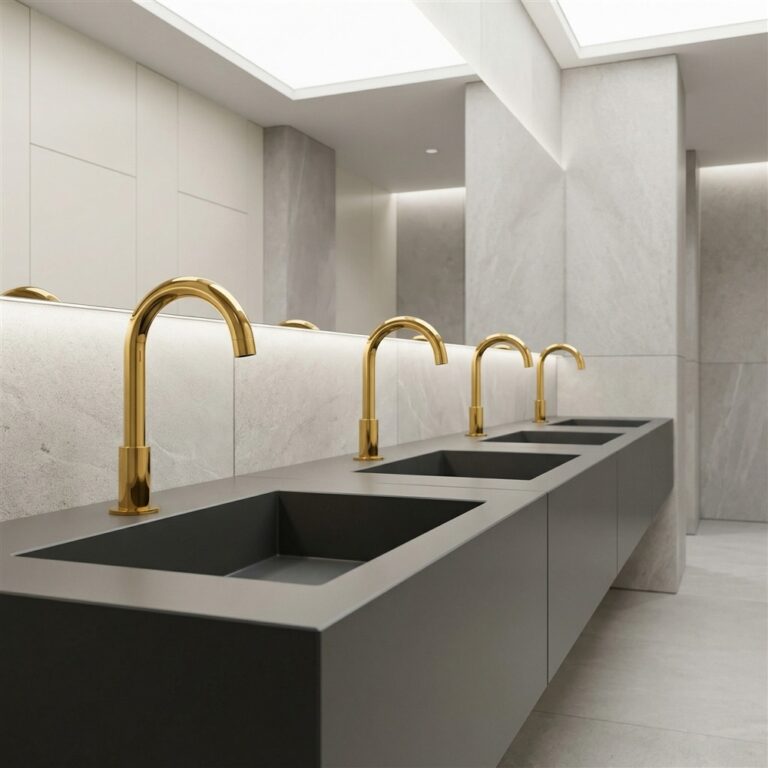
Warm architectural statement with reduced reflectivity.
Strong contrast but highly revealing of mineral residue.
Subtle commercial finish that disguises routine fingerprints.
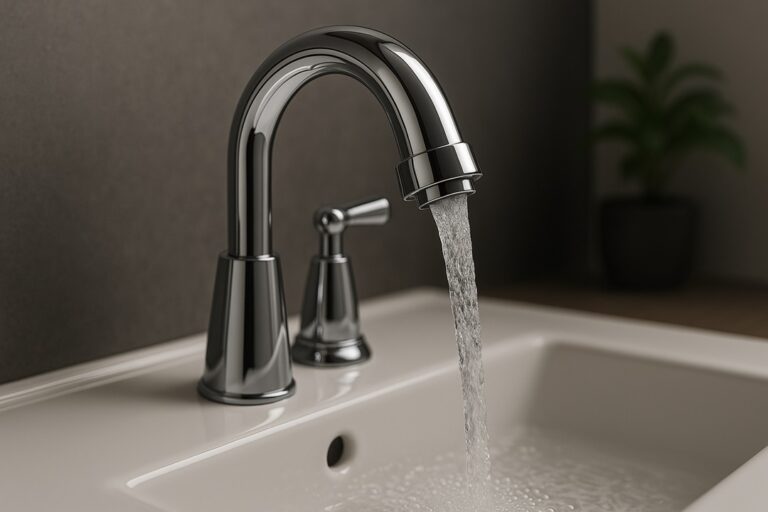
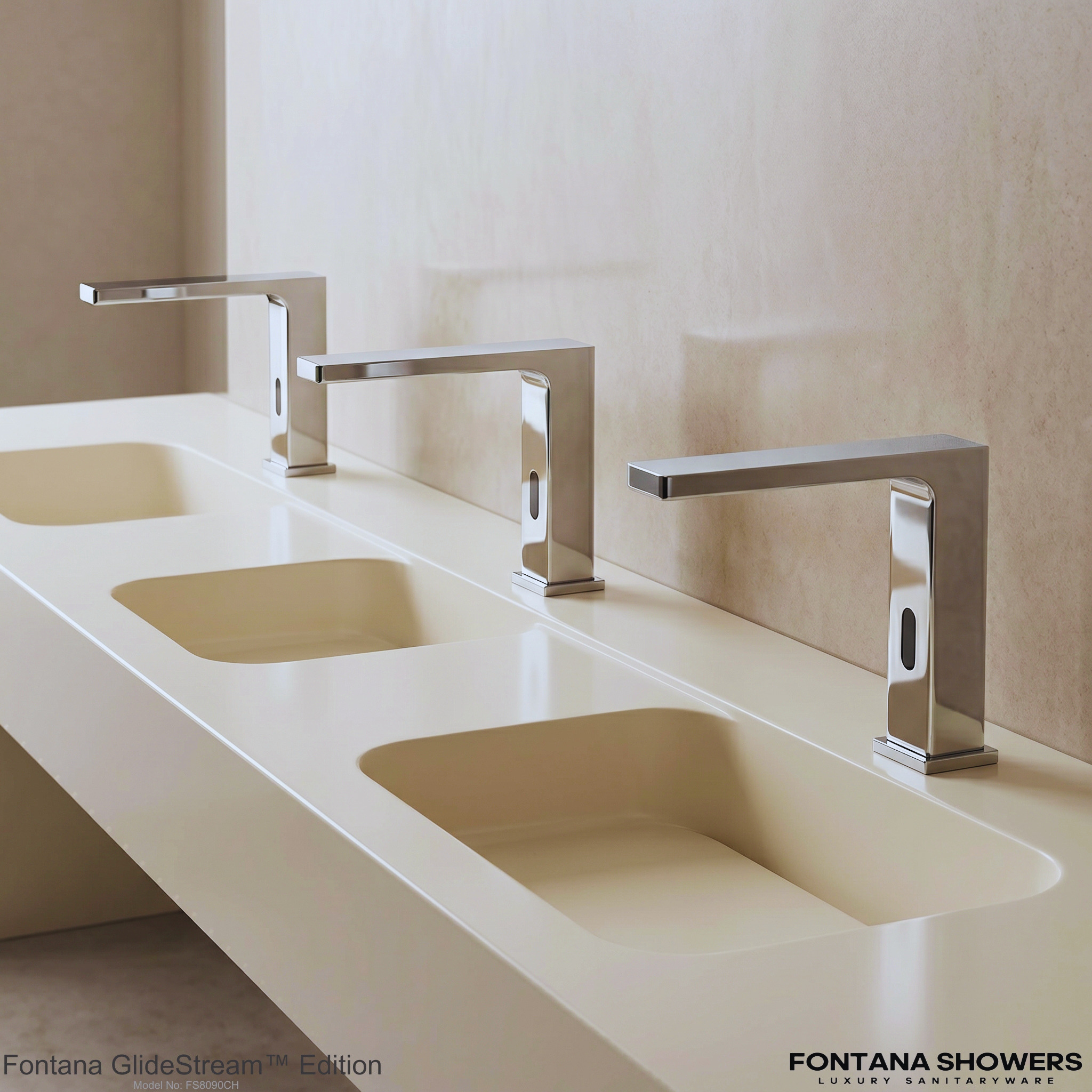
Highly reflective, familiar and generally easy to standardize.
| Finish | Architectural Strength | Maintenance Concern |
|---|---|---|
| Brushed Gold | Luxury / hospitality impact | Finish matching across manufacturers |
| Matte Black | High visual contrast | Hard-water residue visibility |
| Brushed Nickel | Quiet, forgiving appearance | Warm/cool tone variation |
| Champagne Bronze | Warm transitional metallic | Exact finish replacement matching |
| Polished Chrome | Timeless and widely standardized | Fingerprints and water spots |

Fontana Commercial Brushed Gold Touchless Automatic Sensor Hands Free Faucet
The Fontana Commercial Brushed Gold Touchless Automatic Sensor Faucet demonstrates how a warm metallic finish can move a commercial sensor faucet away from traditional institutional styling.
Its brushed surface reduces mirror-like reflectivity while the cast-brass commercial construction makes it appropriate for premium office buildings, luxury hospitality developments and design-led public restrooms.
Strong visual relationship with warm stone, bronze accents and premium lighting.
Do not assume another manufacturer’s “brushed gold” will visually match.
BathSelect™ Matte Black Commercial Automatic Touchless Sensor Faucet
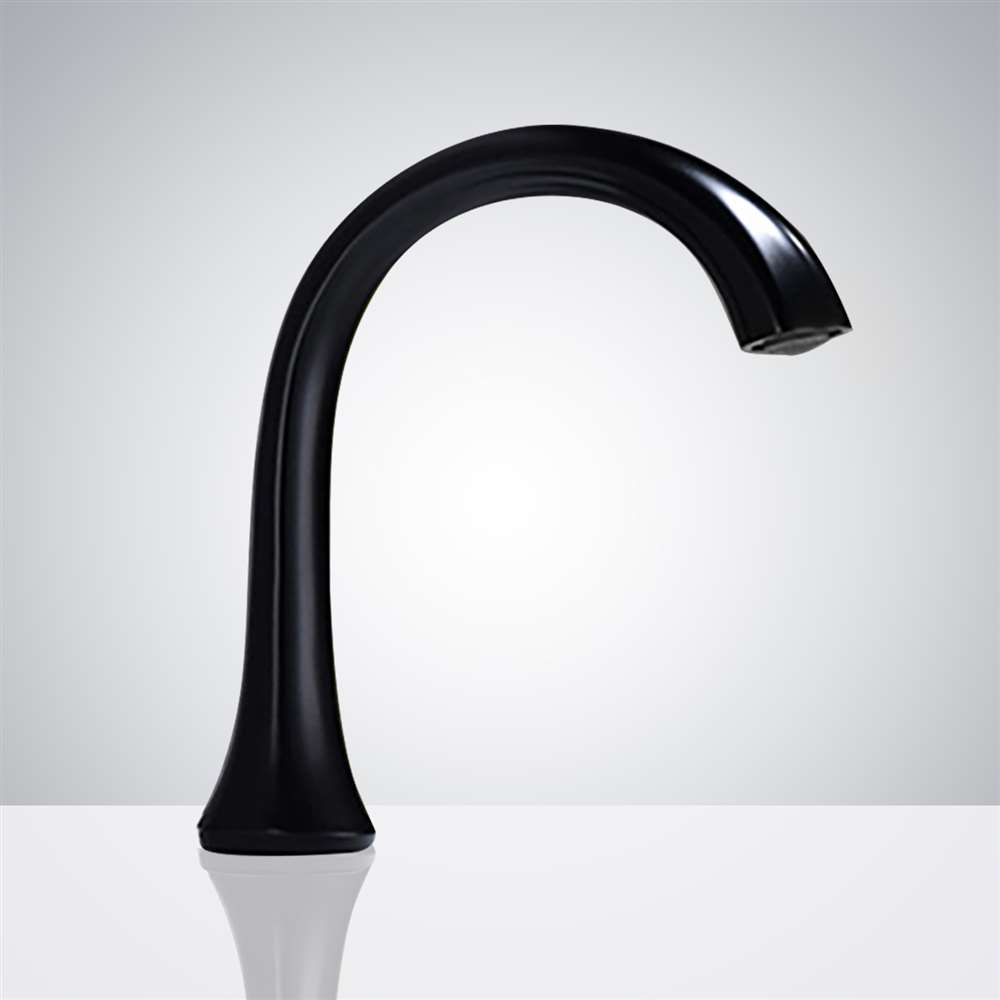
Matte black produces strong visual separation against white quartz, pale stone and backlit mirrors. BathSelect combines that finish direction with commercial brass construction and automatic sensing.
For architects, the key issue is maintenance visibility: dried mineral deposits can contrast strongly against a dark surface.
Excellent for contemporary monochrome or high-contrast restroom schemes.
Water quality and housekeeping chemistry directly affect long-term appearance.
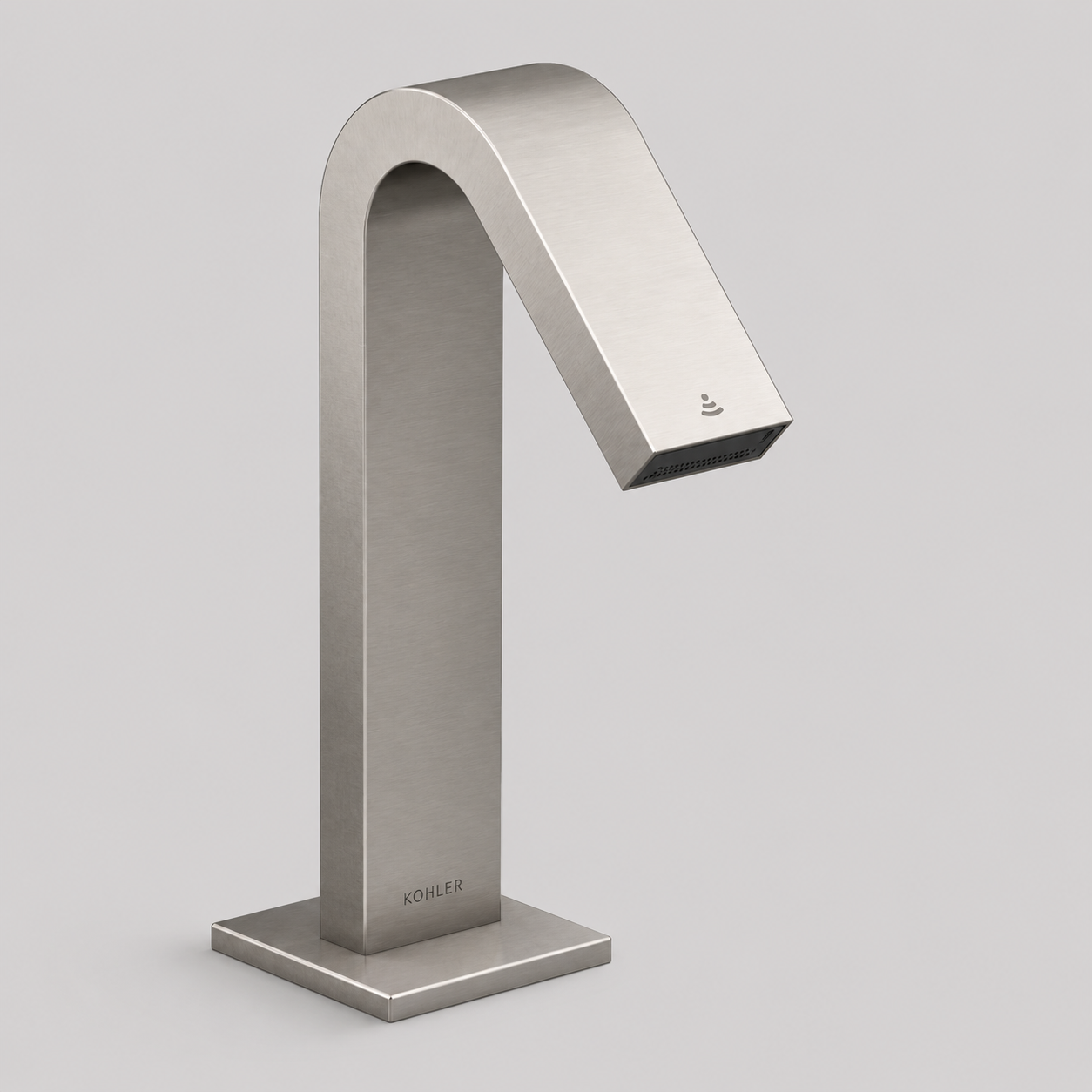
KOHLER Loure® Touchless Faucet — Vibrant Brushed Nickel
KOHLER’s Vibrant Brushed Nickel Loure illustrates the “quiet luxury” side of commercial finish specification. The lower-reflectivity metallic surface works particularly well where architects want the faucet to complement rather than dominate the vanity.
The concealed Kinesis sensor further reduces visual interruption.
Forgiving surface appearance with restrained commercial detailing.
Nickel tone varies by manufacturer; coordinate nearby accessories using physical samples.
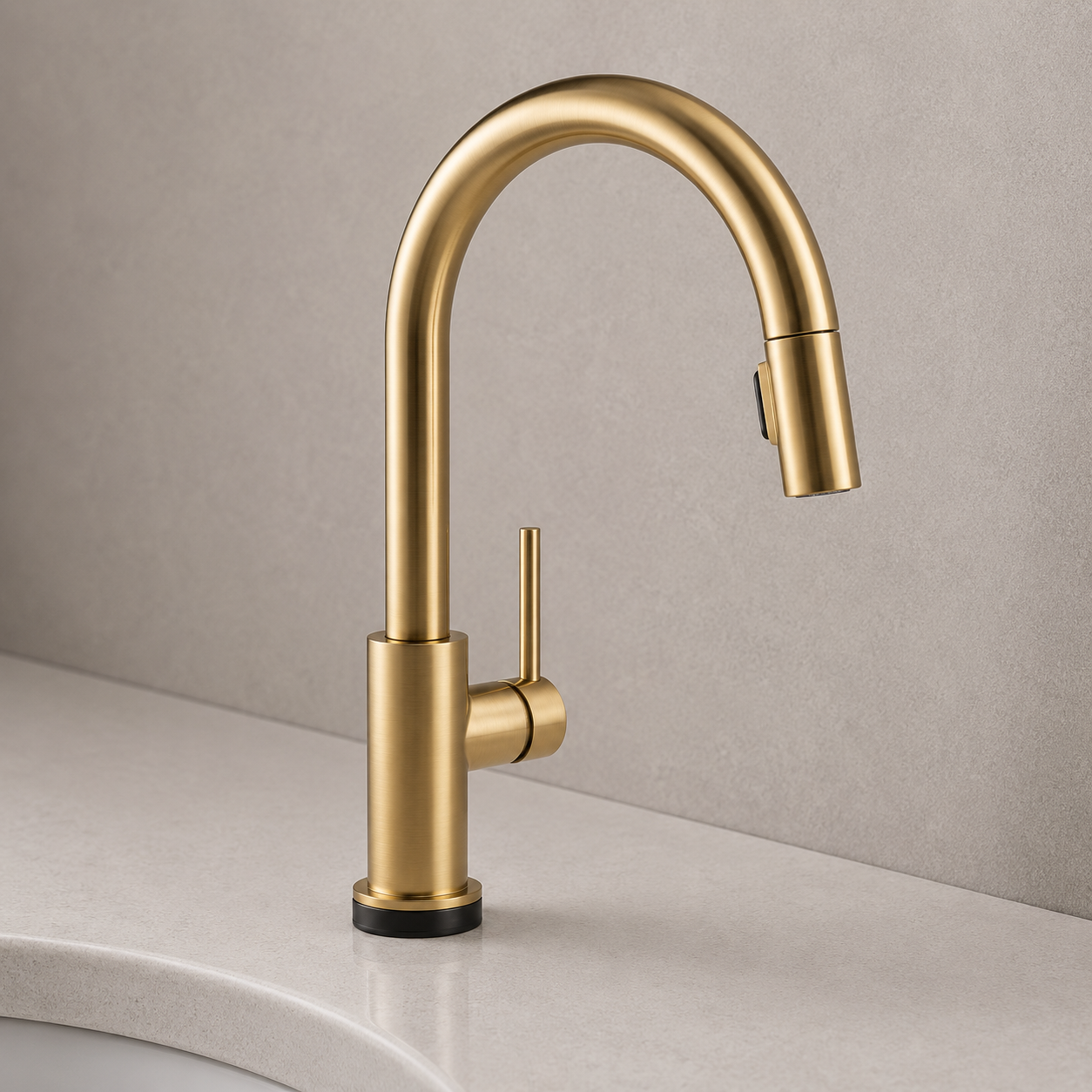
Delta Rustica™ Champagne Bronze Commercial Proximity Faucet
Champagne Bronze gives architects a warmer and softer alternative to conventional polished gold. Delta’s Rustica pairs the finish with a high-arc commercial form and whole-body Proximity sensing.
This is particularly useful in luxury hospitality and premium restaurant environments where the faucet must read as part of the interior palette rather than generic restroom hardware.
Warm transitional metallic suitable for stone, wood and bronze-accent interiors.
Protect the exact finish designation throughout value engineering and substitutions.
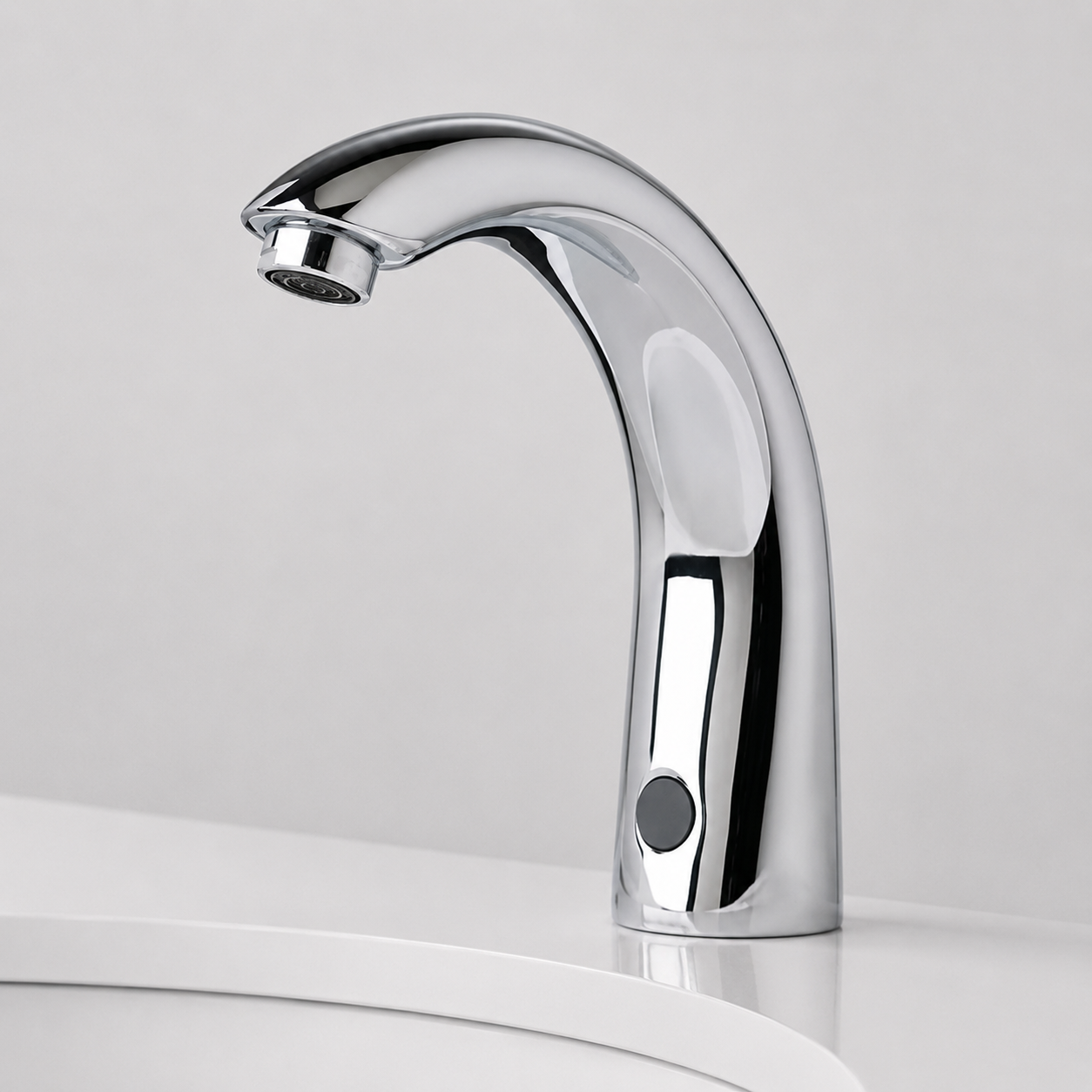
American Standard Selectronic® Cast Touchless Faucet — Polished Chrome
Polished chrome remains highly relevant because it is familiar, reflective, neutral and comparatively straightforward to standardize across large commercial portfolios.
Its weakness is visual maintenance: fingerprints, dried droplets and streaking are easier to see than on brushed metallic surfaces.
Excellent long-term specification for broad commercial portfolios.
High reflectivity exposes housekeeping inconsistencies quickly.
Image requirement: every case-study image is displayed uncropped at 500+ px desktop width and the entire image links to the corresponding faucet page.
Do Not Assume Every Gold or Black Finish Uses the Same Process
Architects should distinguish the appearance name from the finish technology. A gold-colored faucet may use PVD, another deposited coating, plating or a manufacturer-specific finish process.
Review Physical Samples Under Project Lighting
Warm LED lighting can make nickel appear warmer and gold more saturated. Cool lighting can shift the same finish in the opposite direction.
Review faucet, drain, mirror trim, accessories and hardware together using physical samples where visual matching matters.
The Cleaning Specification Protects the Finish Specification
| Risk | AEC Response |
|---|---|
| Abrasive pads | Prohibit unless manufacturer-approved |
| Strong acids | Verify chemical compatibility |
| Hard-water deposits | Define routine removal procedure |
| Unknown cleaners | Provide approved cleaning schedule |
| Future replacement | Record exact finish code in asset register |
Finish Selection by Project Type
| Luxury hospitality | Brushed Gold / Champagne Bronze |
| Contemporary office | Matte Black / Brushed Nickel |
| Healthcare public areas | Chrome / Brushed Nickel |
| Large institutional portfolio | Polished Chrome |
| Premium executive restroom | Brushed Nickel / Gold |
Commercial Faucet Finish Brands to Know
Commercial Faucet Finish FAQ
Is brushed gold always PVD?
No. Finish name does not establish coating technology. Require manufacturer documentation if PVD is a project requirement.
Which finish hides fingerprints best?
Brushed nickel and other brushed finishes generally disguise routine fingerprints better than polished chrome.
Does matte black show hard-water deposits?
Yes. Light mineral residue can be particularly visible against a dark matte surface.
Why is chrome still widely specified?
It is visually neutral, broadly available and relatively easy to standardize across long project lifecycles.
Should architects match fixtures from different manufacturers?
Only after reviewing physical samples. Identically named finishes can differ noticeably in hue, sheen and texture.
Should cleaning requirements be included in closeout documents?
Yes. Approved cleaning procedures help preserve decorative finishes after turnover.
Professional References
American Institute of Architects
Architectural practice, specification and project-delivery resources.
American Society of Plumbing Engineers
Commercial plumbing and fixture-specification resources.
ASME A112.18.1 / CSA B125.1
Performance framework relevant to plumbing supply fittings.
International Facility Management Association
Facility lifecycle and maintenance-management resources.
U.S. Green Building Council — LEED
Building performance and material/lifecycle context for commercial projects.
Specify the Finish System—not Just the Color
Brushed gold and Champagne Bronze create powerful luxury statements; matte black delivers architectural contrast; brushed nickel offers a quieter and more forgiving metallic surface; and polished chrome remains an exceptionally practical long-term commercial standard. The architect’s job is to preserve the exact finish intent through samples, substitutions, cleaning requirements and future replacement documentation.
Review Fontana Brushed Gold Commercial Faucet →Independent editorial disclosure: ArchFaucets.com provides independent architecture and specification-oriented analysis. Finish names, coating technologies and cleaning requirements vary by manufacturer. Verify the exact submitted finish, coating documentation, approved cleaning instructions and current product availability before approval.